Trees & Plants in British, Irish & Celtic Folklore
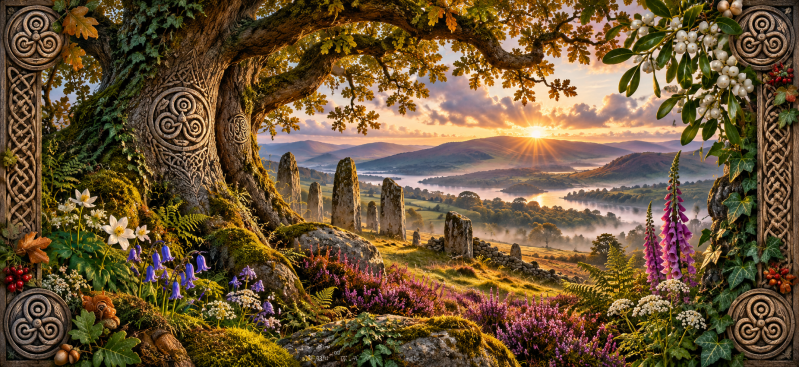
Trees, flowers and wild plants have shaped the folklore of Britain and Ireland for centuries. Some were associated with protection or healing, others with fairies, seasonal customs, sacred places and beliefs about good or ill fortune. Ancient trees became landmarks, meeting places and features of stories that survived long after the people who first told them had disappeared.
Hawthorn was famously connected with the fairy world, while rowan became associated with protection and yew trees with churchyards, longevity and death. Hazel appears in Irish traditions of wisdom, oak acquired powerful cultural and religious associations, and plants such as holly, ivy and mistletoe became woven into seasonal customs.
Yet, as with animals in folklore, there was never one universal system of “Celtic plant meanings”. Traditions varied between Ireland, Wales, Scotland, England and different periods of history. This collection explores those traditions through surviving mythology, recorded folklore, historical sources and the landscapes in which these plants grew.
Sacred Trees in British, Irish & Celtic Folklore
Trees have long stood at the meeting point between the natural world and human belief. Across Britain and Ireland, particular trees became associated with ancient places, boundaries, holy wells, churchyards and local traditions. Some individual trees were treated with such respect that damaging them was believed to invite misfortune.
Irish and Welsh literature preserves stories in which trees and woodland form part of supernatural landscapes, while later folklore attached particular beliefs to species such as hawthorn, rowan, yew, oak and elder. Christianity added further layers of tradition, with ancient yews surviving in churchyards and holy wells sometimes sheltered by trees whose significance continued for generations.
Explore the trees below to discover how their stories changed across different regions and periods.
The Hawthorn — Tree of the Fair Folk
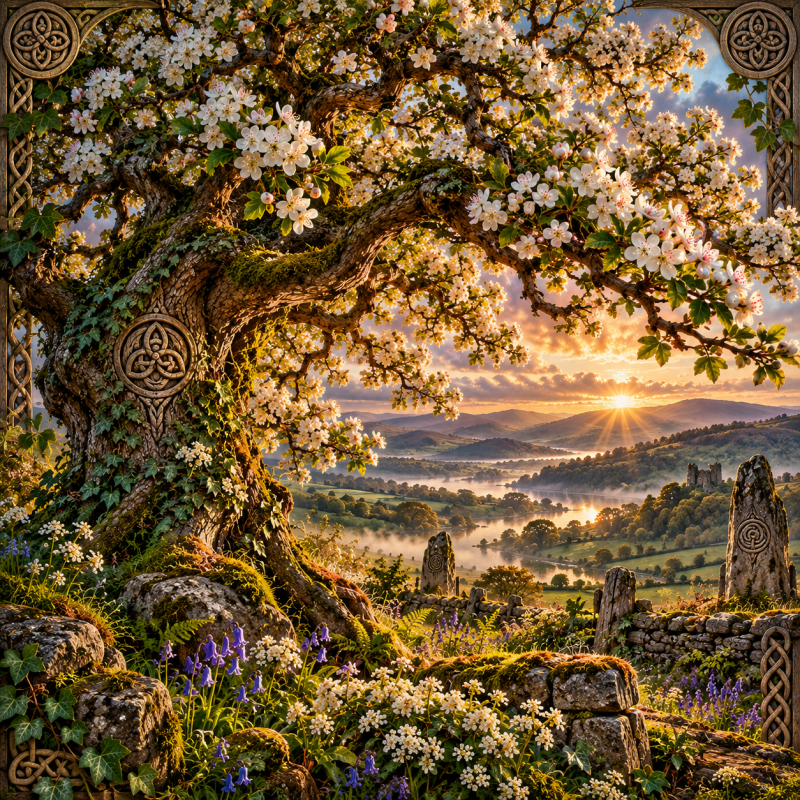
Few trees are as deeply entwined with British and Irish folklore as the hawthorn. Lone hawthorns were sometimes treated with particular caution, especially in Ireland, where traditions connected certain trees with the Aos Sí and the fairy world. Cutting or damaging such a tree could be regarded as an invitation to misfortune.
Yet hawthorn also belongs to the brightness of spring. Its white blossom became associated with May, seasonal customs and the return of summer, giving the tree a fascinating double character — beautiful and celebratory, yet surrounded by warnings and supernatural belief.
The Rowan — Tree of Protection
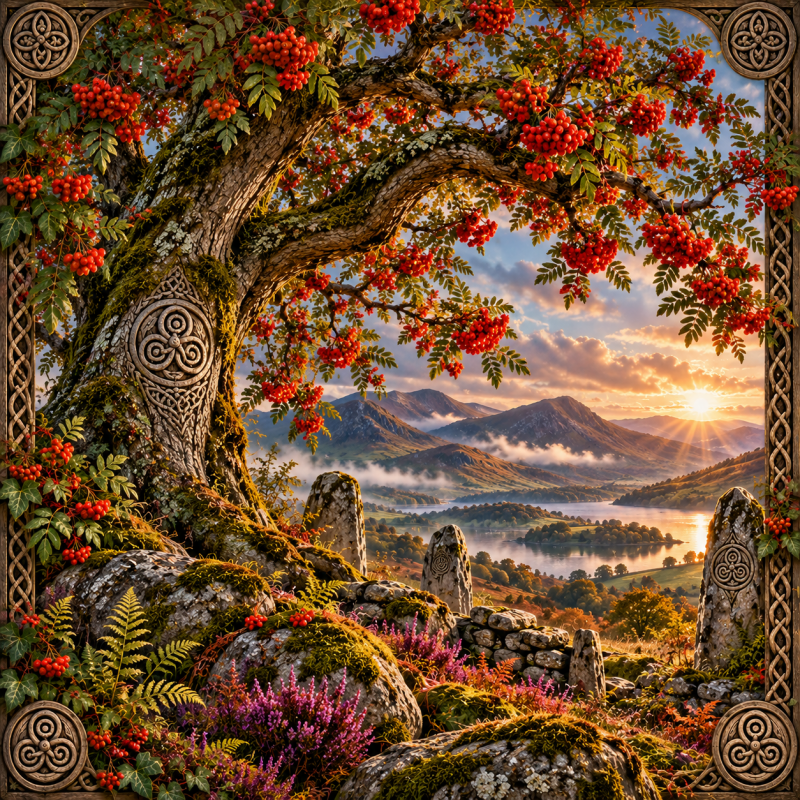
With its clusters of bright red berries and finely divided leaves, the rowan became one of the trees most strongly associated with protection in Scottish, Irish and wider British folklore. Rowan wood, twigs and berries appear in traditions intended to guard homes, livestock and people against harmful supernatural influences.
The tree's reputation was particularly strong in Scotland, where rowan trees were sometimes deliberately retained near houses and farm buildings. Later folklore connected the tree with protection from witchcraft and enchantment, while its striking appearance helped ensure its place in both traditional belief and modern Celtic-inspired symbolism.
The Yew — Tree of the Churchyard
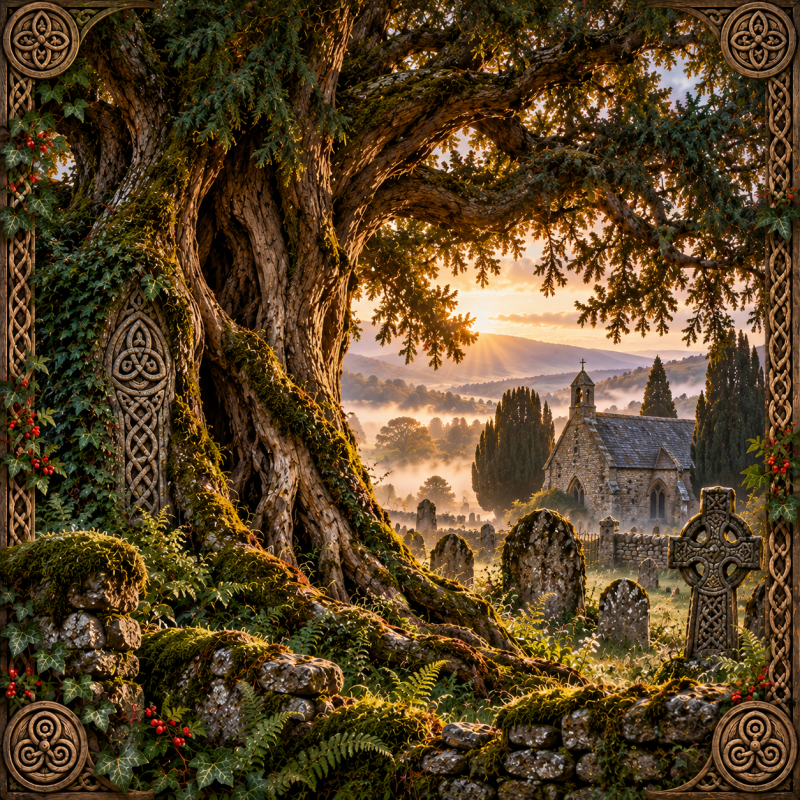
Ancient yew trees are among the most remarkable living features of the British and Irish landscape. Their extraordinary longevity and frequent presence in churchyards have surrounded them with traditions concerning death, endurance, memory and renewal.
Some yews are believed to pre-date the churches beside them, although the history of individual trees can be difficult to establish with certainty. Over centuries, yews became woven into Christian burial landscapes as well as later ideas about older sacred places, creating a complex folklore in which history, belief and legend often overlap.
The Oak — Strength, Sacred Places & Ancient Tradition
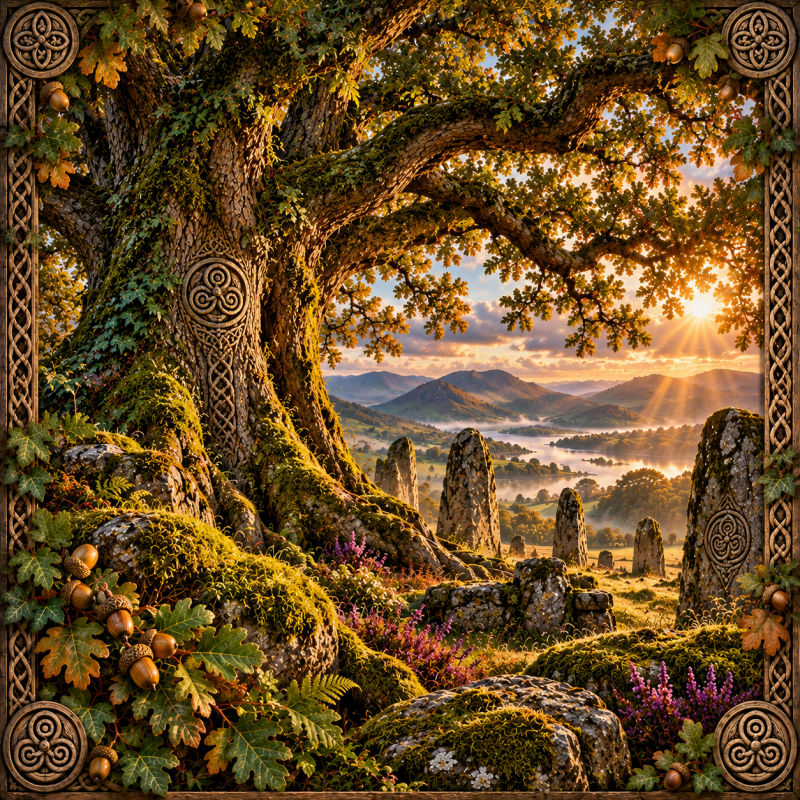
Few trees have had as prominent a place in the history and imagination of Britain and Ireland as the oak. Its great size, longevity and valuable timber made it an important part of everyday life, while individual ancient oaks became landmarks around which stories and traditions accumulated.
Classical writers famously associated Druids with sacred groves and described ritual involving oak and mistletoe, although these accounts need to be treated carefully when reconstructing ancient Celtic belief. In later British and Irish tradition, the oak continued to represent endurance, age and the enduring presence of the woodland landscape.
The Elder — Witches, Spirits & Protective Folklore
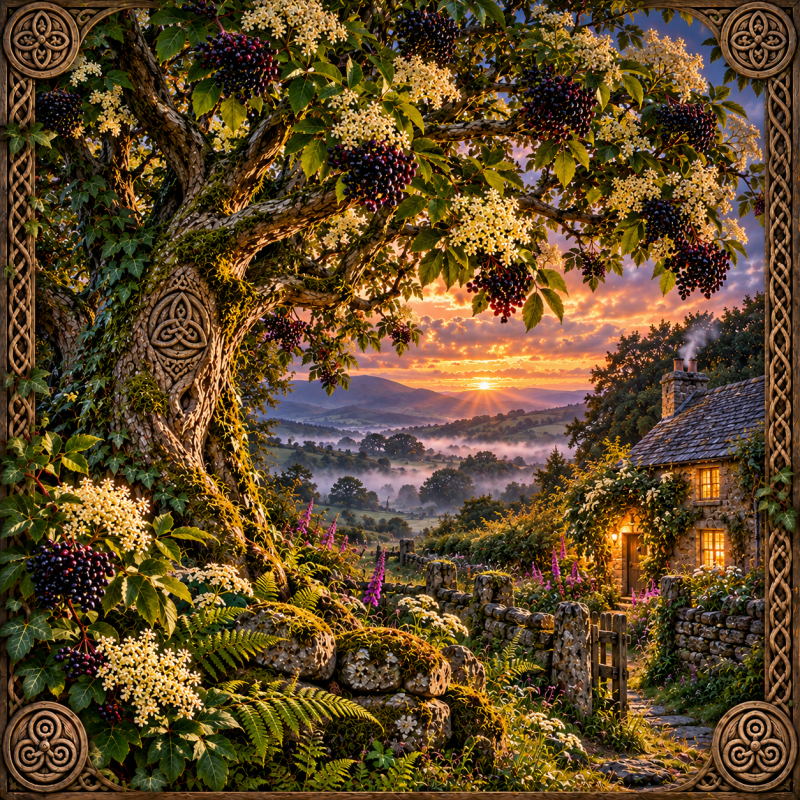
Elder grew close to homes, hedgerows and farm buildings across Britain and Ireland, and a remarkable collection of beliefs gathered around it. In some traditions the tree was treated with caution or respect, and permission was said to be needed before cutting its branches.
Elder became associated with witches, spirits, protection and misfortune, sometimes in seemingly contradictory ways. It could be regarded as a tree capable of guarding a household while at the same time being dangerous to offend — a good example of how folklore rarely gives a plant one simple meaning.
The Hazel — Wisdom, Salmon & Sacred Knowledge
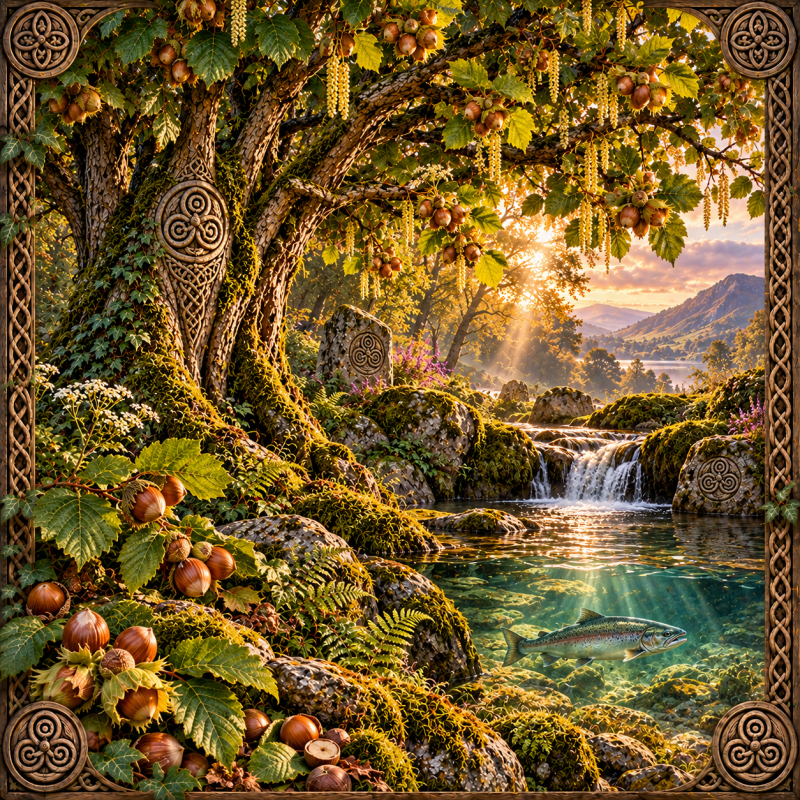
Hazel has a particularly rich place in Irish tradition, where hazelnuts became associated with wisdom and poetic knowledge. The best-known stories connect hazel trees with sacred waters and the Salmon of Knowledge, creating one of the most memorable relationships between a tree and an animal in Irish mythology.
Hazel also had an important practical place in the landscapes of Britain and Ireland. Its flexible wood was used for hurdles, baskets, walking sticks and many everyday objects, while later folklore added traditions involving divination, protection and the search for hidden water.
The Holly — Winter, Protection & Evergreen Folklore
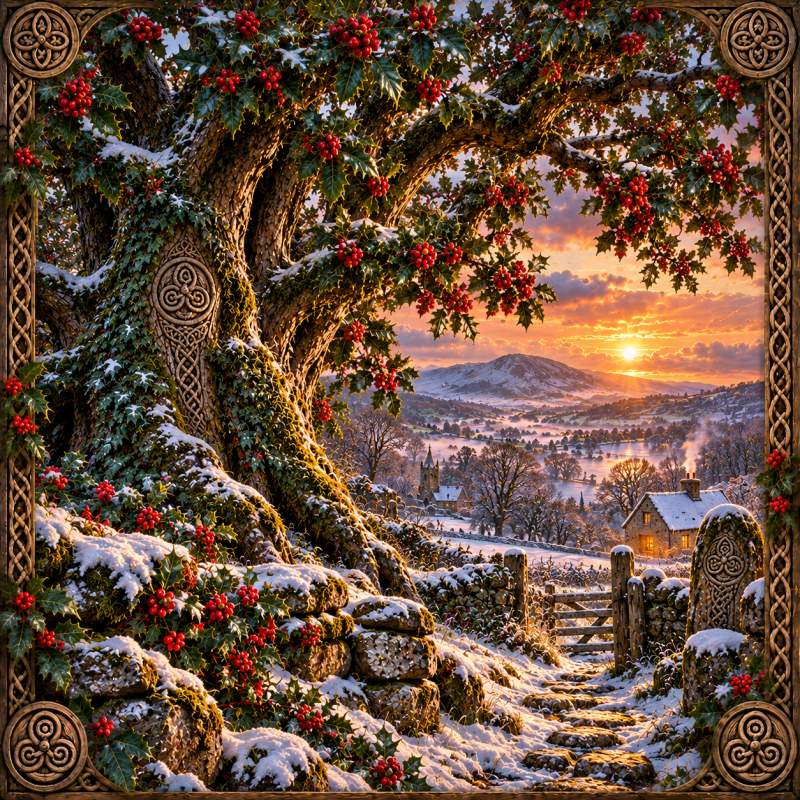
Holly's evergreen leaves and brilliant red berries made it one of the most distinctive plants of the British and Irish winter landscape. Long before modern Christmas decorations, evergreen plants were brought into homes during the darkest part of the year and became surrounded by customs concerning protection, luck and the turning of the seasons.
Holly later became deeply woven into Christmas tradition and Christian symbolism, while older and regional folklore included beliefs about bringing holly indoors, when it should be removed and even whether smooth or prickly leaves foretold who would rule the household during the coming year.
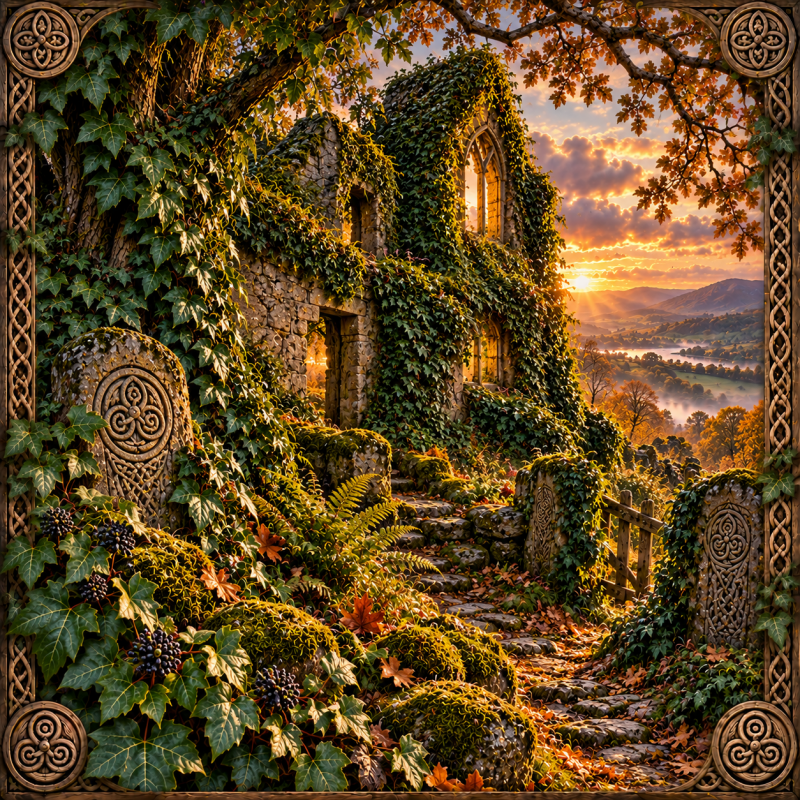
Ivy — Evergreen Folklore, Winter & Old Places
Ivy has covered trees, walls and ruins across Britain and Ireland for centuries. Because it remains green through winter, it became part of seasonal traditions alongside holly and other evergreens, particularly when greenery was brought indoors during the darkest months of the year.
Folklore surrounding ivy varies considerably. It appears in traditions concerning luck, friendship, fidelity and protection, while its habit of clinging to ancient trees and abandoned buildings helped give it a strong association with age and enduring places. Holly and ivy eventually became especially familiar companions in British Christmas custom.
The Blackthorn — Thorns, Winter & Darker Folklore
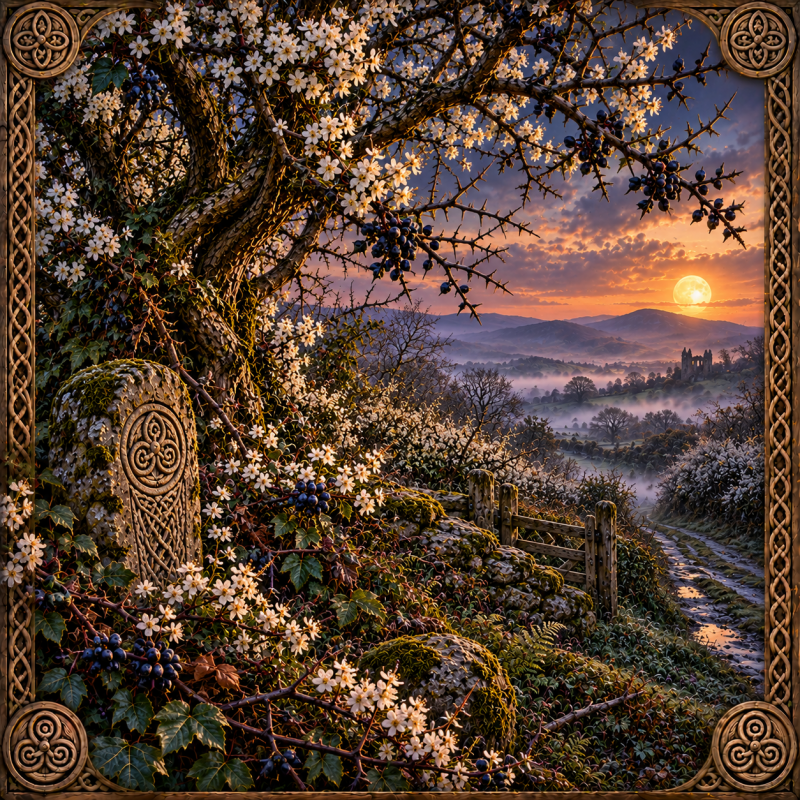
Blackthorn is a familiar tree of British and Irish hedgerows, producing clouds of white blossom in early spring before its leaves appear and dark sloes later in the year. Its dense growth and formidable thorns made it a natural boundary plant, and these characteristics helped shape the folklore that gathered around it.
In Irish and British tradition, blackthorn acquired associations with protection, hardship, witchcraft and supernatural danger. Its wood was also famously used for walking sticks and Irish shillelaghs. Later folklore and modern Pagan traditions have sometimes given blackthorn a particularly dark reputation, although historical traditions were more varied than a simple idea of an “evil” tree suggests.
Explore Blackthorn in British & Irish Folklore →
Mistletoe — Druids, Winter & Ancient Tradition
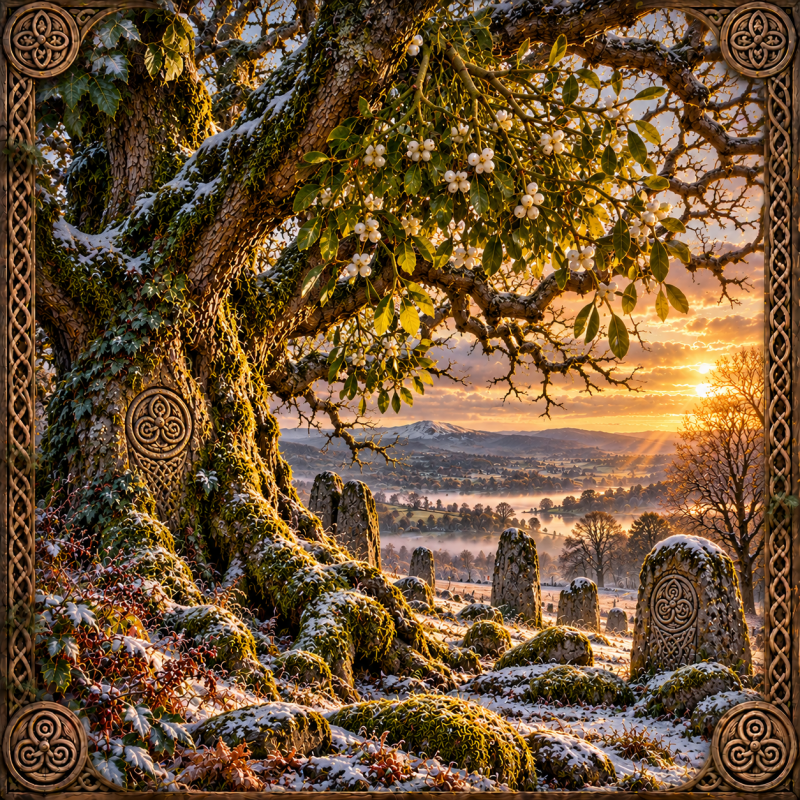
Few plants have become as strongly associated with the ancient Druids as mistletoe. The Roman writer Pliny the Elder famously described Druids in Gaul cutting mistletoe from an oak with a golden sickle during a ritual ceremony. His account has profoundly influenced later ideas about Celtic religion, although it describes a particular practice in ancient Gaul rather than providing evidence for a universal tradition across Britain and Ireland.
Mistletoe later accumulated traditions of its own. As an evergreen plant growing high among the bare branches of its host tree, it became associated with winter, luck and protection, while the familiar custom of kissing beneath mistletoe developed much later.
Explore Mistletoe in Celtic & British Folklore →
The Apple — Avalon, Harvest & the Otherworld
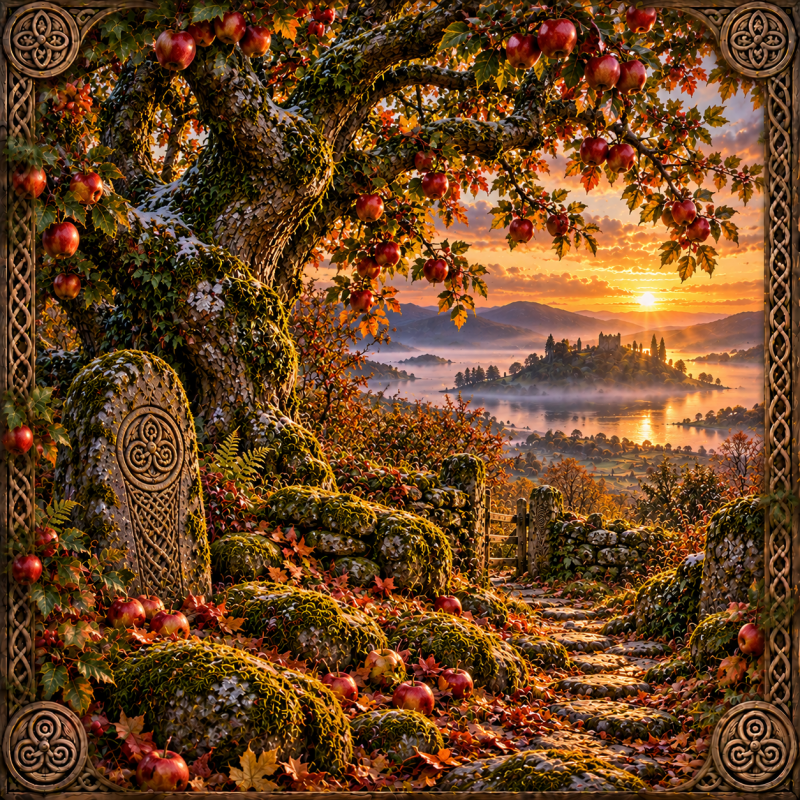
Apples occupy a remarkable place in the folklore and mythology of Britain and Ireland. Orchards were part of everyday rural life, but apples also became associated with abundance, love, divination and seasonal customs, particularly around autumn and the harvest.
In medieval literature, magical apples and apple-bearing otherworldly places appear in both Irish and Welsh tradition. The name Avalon, famous from Arthurian legend, has itself long been associated with apples. Later customs surrounding orchards, including wassailing traditions in parts of Britain, added another layer of folklore intended to encourage a fruitful harvest.
The Ash — Sacred Trees, Healing & Folklore
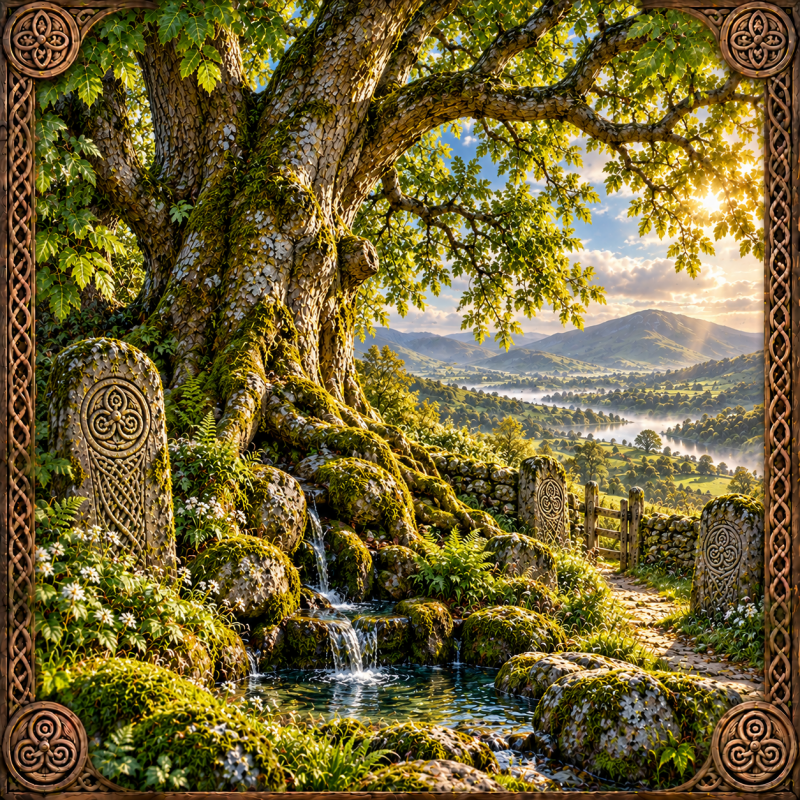
Ash was one of the most familiar trees of the British and Irish countryside, valued for its strong, flexible timber and surrounded by a wide range of traditional beliefs. Individual ash trees became associated with healing customs, protection and local traditions, while the tree appears repeatedly in the folklore of rural communities.
Some British traditions involved passing sick or injured children through split ash trees in the hope of healing them, while Irish folklore also preserved beliefs surrounding particular sacred or significant trees. As with many trees, later Celtic and Pagan interpretations added further layers to a much older and more complicated body of tradition.
Birch — Renewal, Ogham & New Beginnings
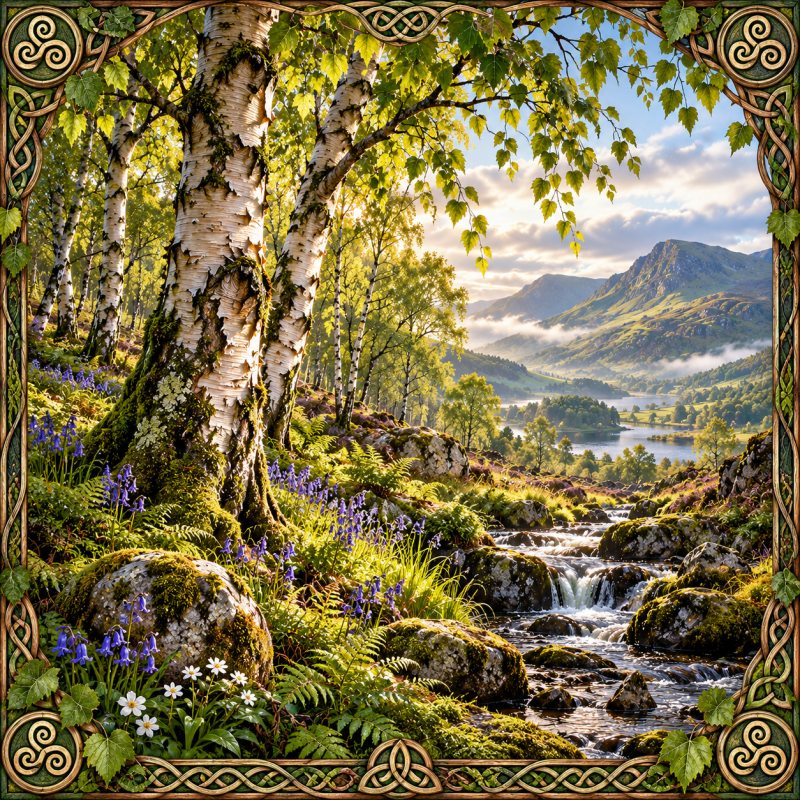
With its distinctive pale bark and delicate leaves, birch has become associated with renewal, purification and new beginnings. Discover its connection with Beith and the Ogham alphabet, traditional birch besoms, seasonal customs, Highland birchwoods and the folklore that developed around one of Britain and Ireland's most recognisable trees.
Willow — Water, Healing & Moonlit Folklore
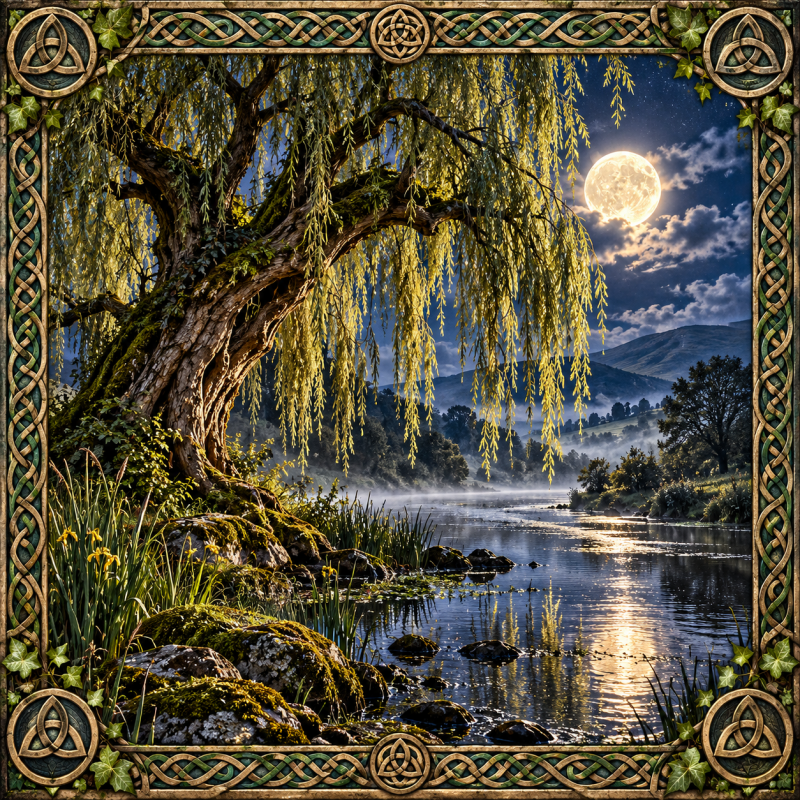
Growing beside rivers and wetlands, willow has gathered traditions of healing, mourning, magic and resilience. Discover Saille and the Ogham tradition, willow's remarkable medicinal history, moon symbolism, folk belief and the centuries-old craft of weaving willow into baskets and hurdles.
Trees, Plants & the Turning of the Year
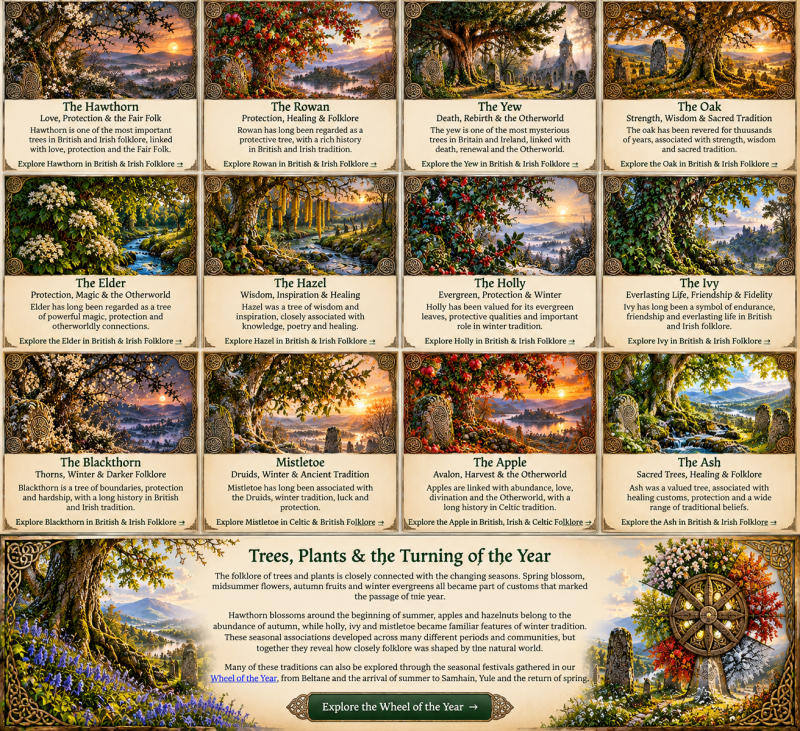
The folklore of trees and plants is closely connected with the changing seasons. Spring blossom, midsummer flowers, autumn fruits and winter evergreens all became part of customs that marked the passage of the year.
Hawthorn blossoms around the beginning of summer, apples and hazelnuts belong to the abundance of autumn, while holly, ivy and mistletoe became familiar features of winter tradition. These seasonal associations developed across many different periods and communities, but together they reveal how closely folklore was shaped by the natural world.
Many of these traditions can also be explored through the seasonal festivals gathered in our Wheel of the Year, from Beltane and the arrival of summer to Samhain, Yule and the return of spring.
Explore Animals in Celtic & British Folklore
The ancient landscapes of Britain and Ireland were home to more than sacred trees and mysterious plants. Animals also played an important part in traditional folklore, carrying stories of transformation, wisdom, protection and the Otherworld.
From the mystical hare and watchful raven to the noble stag, salmon of wisdom and mysterious barn owl, discover the creatures that inspired generations of storytellers in our Animals in Celtic & British Folklore collection.