Celtic & Pagan Folklore
Belief in Celtic and Pagan Folklore: A World Where Nature, Spirits and the Otherworld Meet
Celtic and Pagan folklore is filled with stories of sacred landscapes, mysterious beings, powerful animals, ancient gods, seasonal celebrations and places where the boundary between the human world and the supernatural seems remarkably thin.
But understanding these beliefs requires a little care. There was never one single “Celtic religion” practised identically everywhere, nor was there one universal collection of Pagan beliefs. The peoples we now describe as Celtic lived across different regions and periods, while much of the mythology that survives from Ireland and Wales was written down centuries after Christianity had become established.
What remains is an extraordinary mixture of ancient traditions, medieval literature, local folklore, later customs and modern Pagan interpretations.
And at the heart of much of it is a powerful idea:
The landscape is more than simply scenery.
Mountains, rivers, springs, forests, animals and the changing seasons could carry stories, identities and supernatural significance.
A World Filled With the Supernatural
To understand Celtic folklore, it helps to imagine experiencing the countryside without modern explanations for everything around you.
A strange light appears over a marsh. An owl cries from the darkness. Mist suddenly fills a valley. An ancient tree stands alone beside a spring. A person disappears. Crops unexpectedly fail. Someone dreams of a relative shortly before learning that they have died.
Today we might search for scientific explanations.
Earlier communities often interpreted unusual experiences through traditions that had been passed between generations.
The supernatural wasn't necessarily imagined as belonging to some distant fantasy universe. It could exist alongside everyday life.
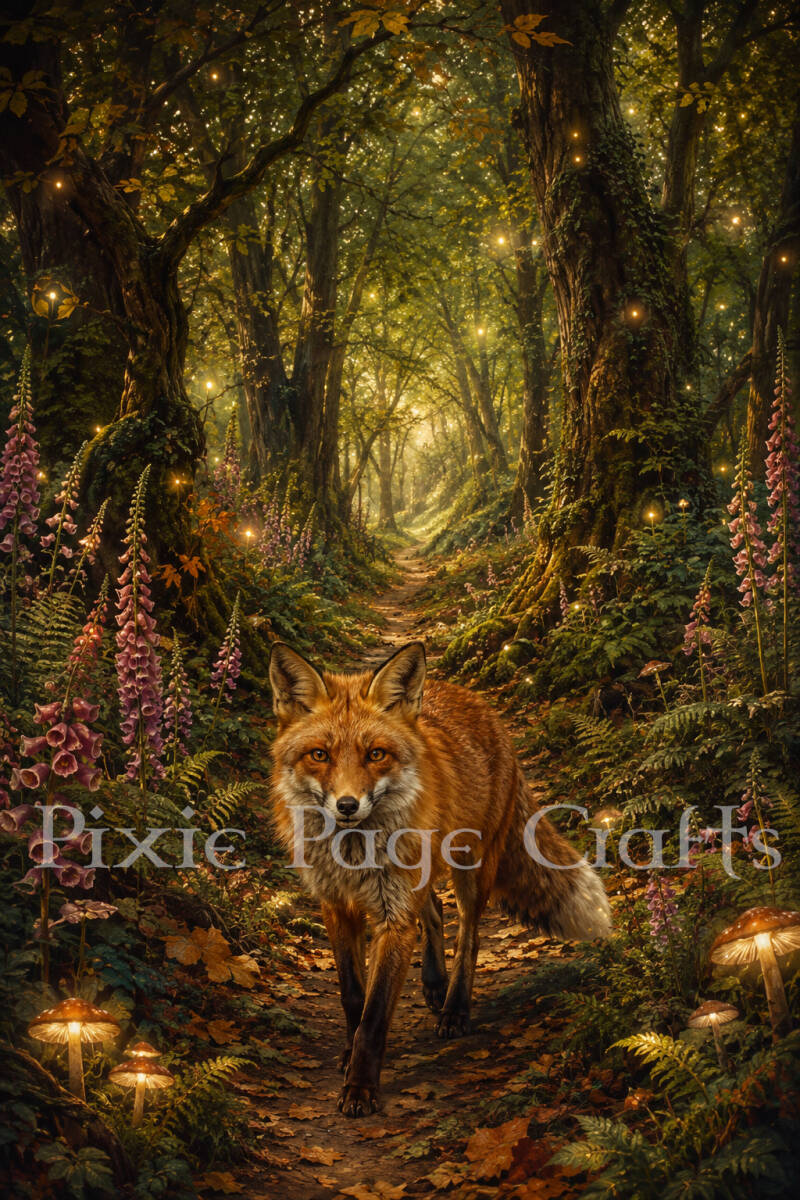
A particular hill might have a story attached to it. A spring might possess healing properties. An ancient mound might be associated with supernatural inhabitants. A certain animal appearing at an unusual moment might be interpreted as significant.
This closeness between the ordinary and extraordinary is one of the most compelling aspects of Celtic folklore.
The Otherworld
One of the recurring concepts in Irish and Welsh mythology is an extraordinary realm commonly described today as the Otherworld.
It should not simply be understood as heaven, hell or the land of the dead.
Different stories describe supernatural realms in different ways. They may contain magnificent halls, endless feasts, beautiful landscapes, supernatural beings and very different experiences of time.
Sometimes the Otherworld appears to be somewhere distant. At other times it seems remarkably close. A person might reach it by crossing water, entering a mound or encountering a mysterious stranger. That creates one of the great themes of Celtic storytelling:
The boundary between worlds can sometimes be crossed. And those boundaries often occur in unusual places.
Sacred Landscapes and Liminal Places
Certain places naturally feel like boundaries. The seashore is neither completely land nor sea. A river separates one bank from another.
A cave takes you from daylight underground. A doorway separates outside from inside. Twilight is neither day nor night.
These are known as liminal spaces — places or moments existing between states.
Folklore repeatedly gives significance to such boundaries. Wells, springs, rivers, caves, ancient trees, hills and burial mounds could all accumulate stories and customs over generations.
This is one reason Celtic-inspired art so often contains standing stones, forests, mountains and water. They create a visual language of ancient landscapes and mysterious boundaries.
But there is an important distinction: not every standing stone was necessarily a Celtic religious monument. Many famous stone circles and megaliths are considerably older than the cultures conventionally described as Celtic.
Later generations could nevertheless create entirely new folklore around ancient monuments whose original purpose had long been forgotten.
Sacred Water
Water has an especially powerful place in Celtic traditions.
Archaeology provides evidence that people deposited valuable objects in rivers, lakes, bogs and springs during prehistoric and Iron Age periods.
Some deposits are interpreted as ritual offerings, although we cannot know the motivation behind every individual object.
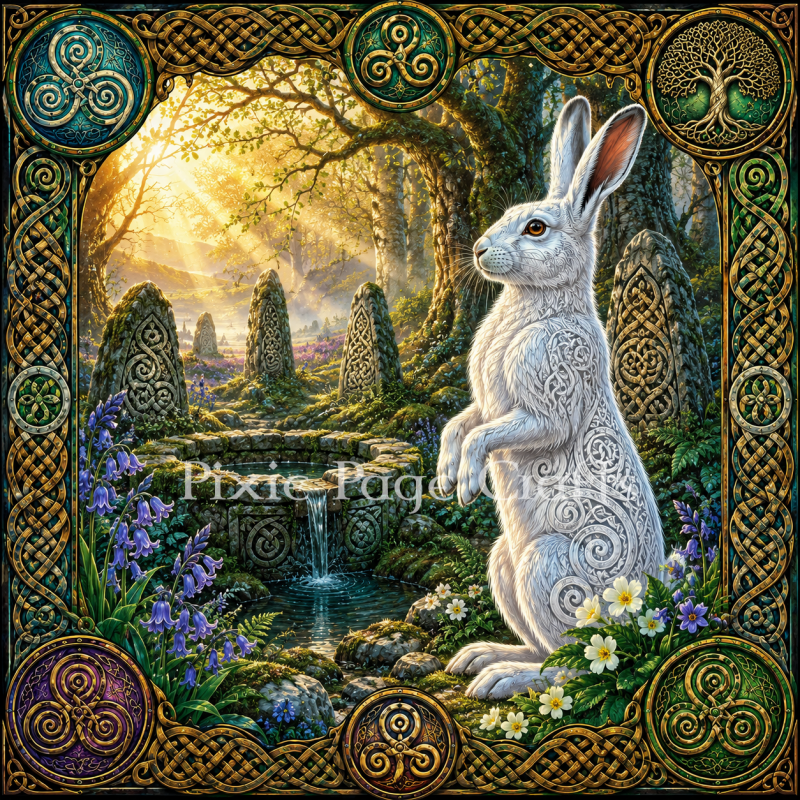
Later folklore also gives wells and springs tremendous importance. Some became associated with healing. Others developed customs involving offerings, prayers or particular days of visitation.
After Christianisation, older traditions and Christian practices could become intertwined, with sacred wells associated with saints.
Water therefore represents something fascinating about folklore itself. Beliefs rarely disappear overnight.
They change.
A sacred place can acquire new stories while retaining something of its older significance.
Trees, Groves and the Living Landscape
Trees occupy an equally powerful position in folklore.
A huge ancient tree naturally commands attention. It can outlive generations of people and become a landmark around which stories accumulate.
Certain trees became particularly prominent in Irish and British traditions.
Hawthorn, for example, developed strong associations with fairies in Irish folklore. Lone hawthorns could consequently acquire reputations that made people reluctant to damage them.
Trees also possess an obvious symbolic power. Every year they appear to die and return. Leaves emerge, flourish, fall and disappear.
Then spring comes again.
For modern Pagan traditions especially, this makes trees natural representations of life, death, renewal and interconnectedness.
The familiar modern Celtic Tree of Life artwork draws upon these broader ideas, although modern designs should not automatically be treated as exact reproductions of a single ancient Celtic religious symbol.
Animals and the Supernatural
Animals are everywhere in Celtic mythology.
Boars, horses, ravens, hounds, salmon, deer and other creatures appear in stories in ways that range from ordinary animals to extraordinary supernatural beings.
Animals could represent qualities humans admired or feared.
The stag possesses magnificent antlers and disappears into forests.
The raven consumes carrion and appears around battlefields.
The salmon travels through mysterious waters.
The horse combines enormous strength with speed.
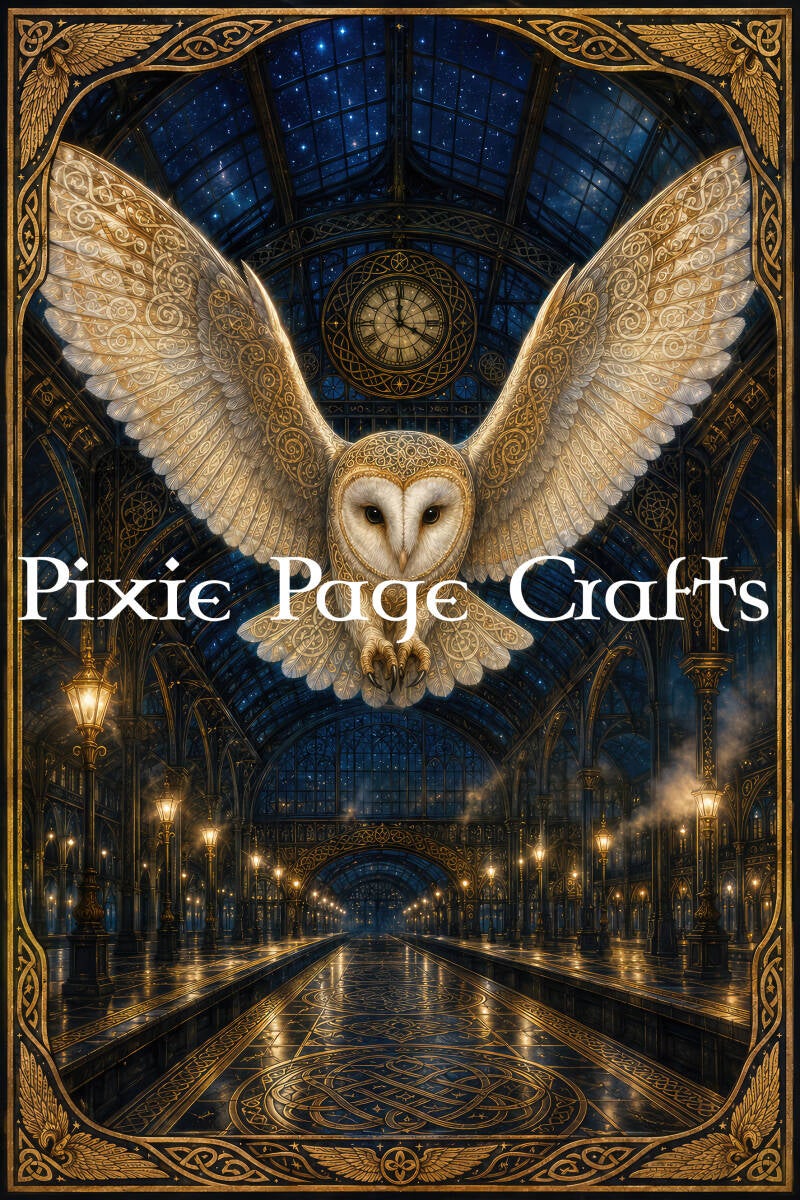
The owl moves through darkness.
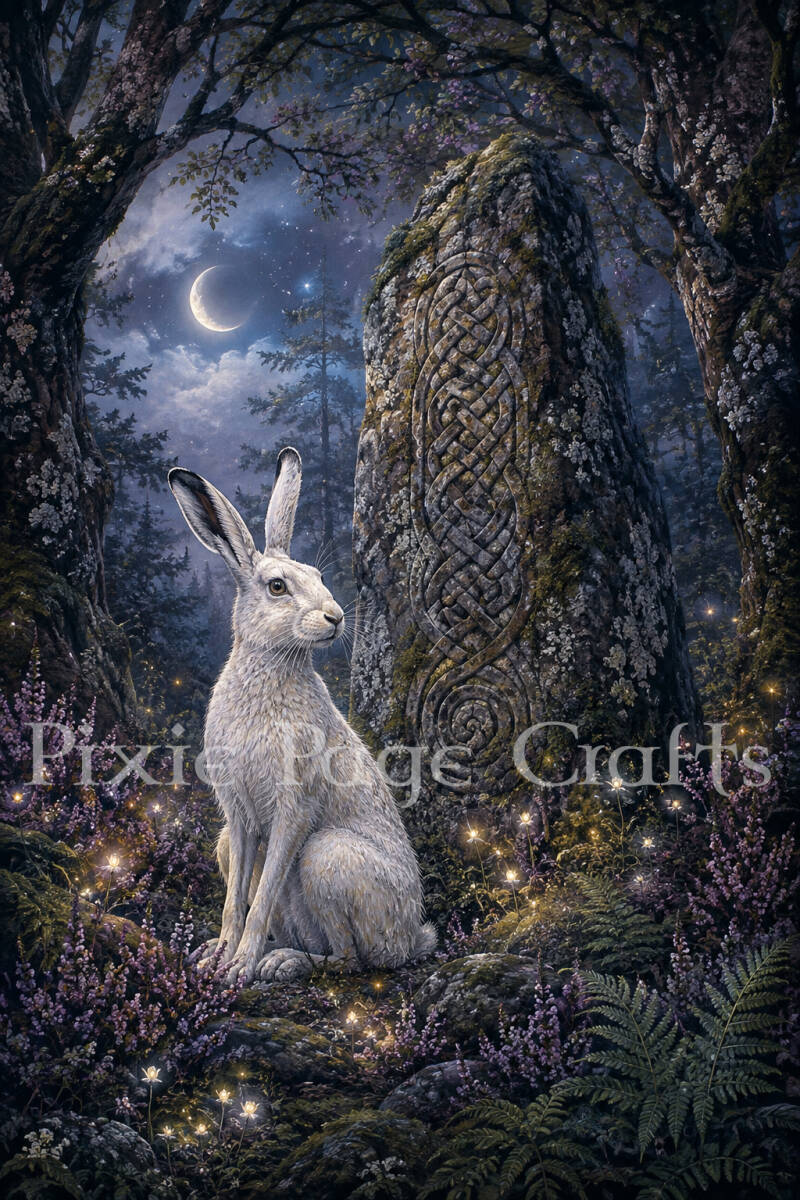
The hare can suddenly appear and disappear across open countryside.
It isn't difficult to see how these characteristics could become incorporated into storytelling.
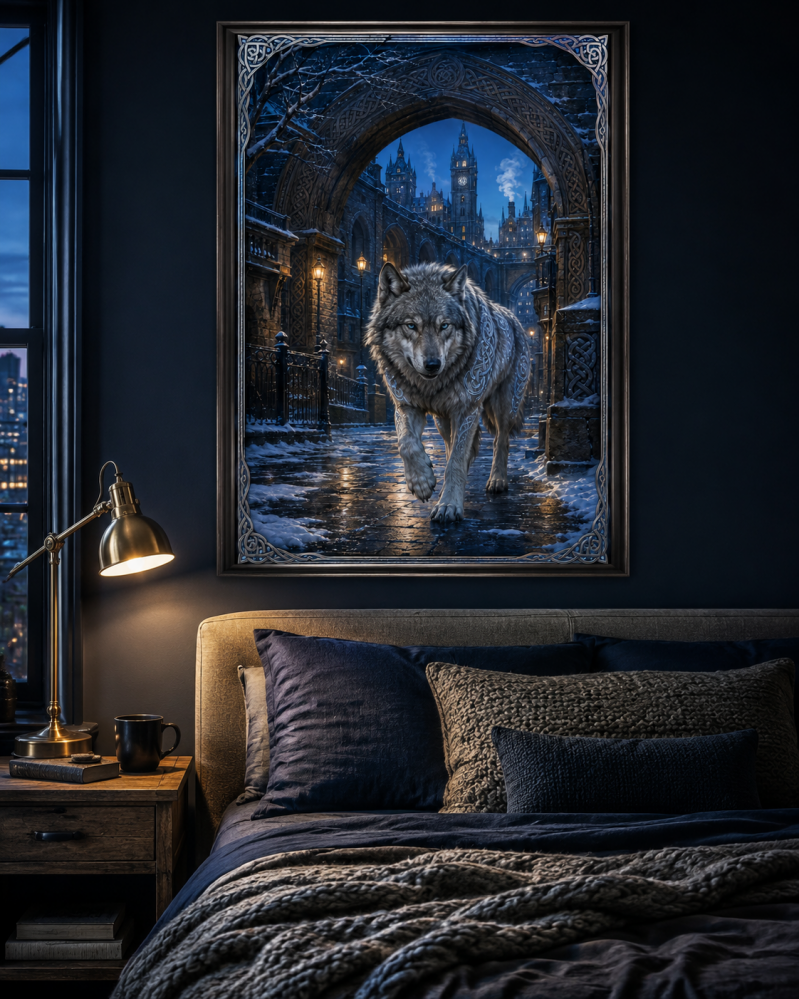
But modern claims such as “the Celts believed the wolf always represented loyalty” should be approached cautiously.
Ancient symbolism was rarely that tidy.
One animal could play completely different roles in different stories.
That actually makes the mythology more interesting.
Shape-Shifting
Transformation is another extraordinary theme found throughout Celtic-language literature and folklore.
Humans become animals. Supernatural beings change their appearance.
Characters pass through different forms.
One famous example occurs in the Welsh Mabinogi, where Blodeuedd is transformed into an owl.
Irish literature contains numerous transformations too.
Shape-shifting allows stories to explore identity in fascinating ways.
What happens when the boundary between human and animal disappears?
What remains of a person when their physical form changes?
Transformation therefore becomes much more than magic. It can represent punishment, escape, wisdom, identity and rebirth.
Fairies Were Not Always Tiny and Friendly
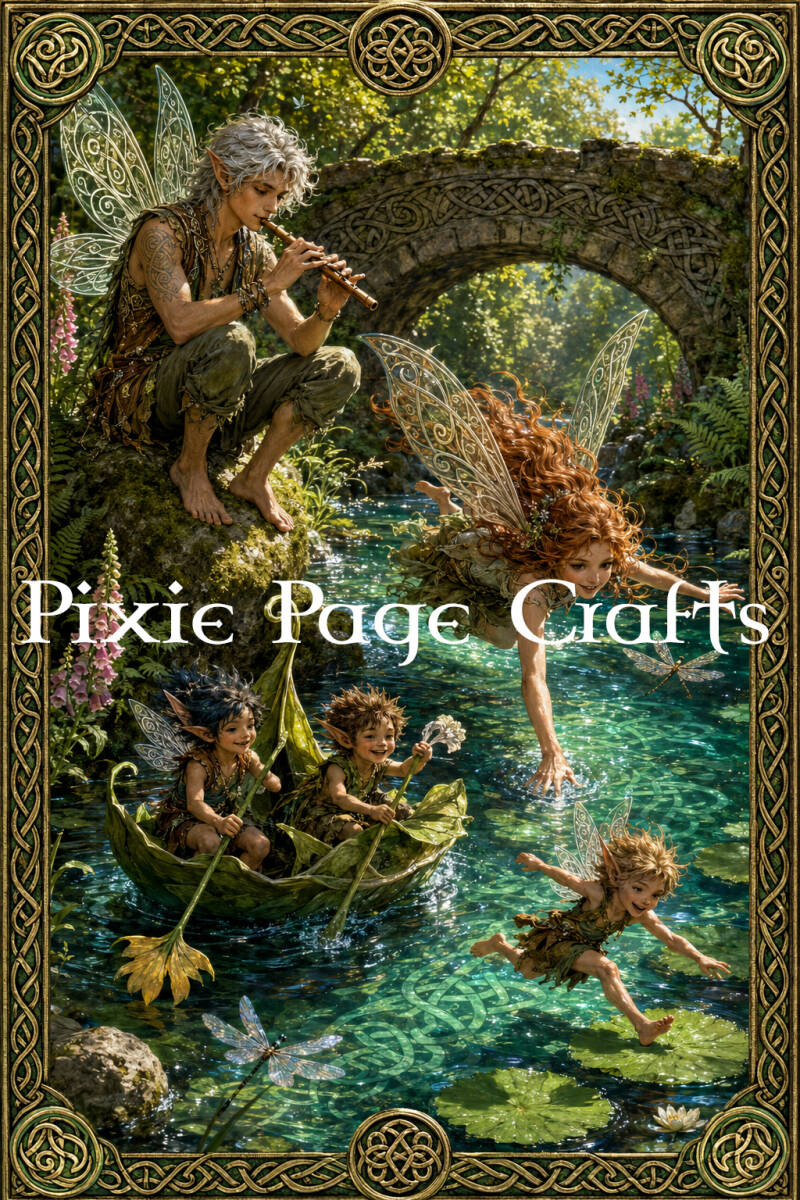
Modern popular culture has dramatically softened the fairy.
The familiar tiny winged creature sitting on a flower is only one relatively recent artistic interpretation.
Traditional fairy folklore could be considerably stranger.
Irish traditions surrounding the Aos Sí, for example, describe supernatural beings associated with ancient mounds and particular places. Encounters could bring good fortune, danger or consequences depending upon the story and circumstances.
Respect mattered. People developed customs intended to avoid offending supernatural beings. Certain places were avoided. Certain actions were considered unwise.
The important point is that these beings weren't necessarily regarded simply as cute magical companions. They belonged to a supernatural world that demanded caution.
This darker and more mysterious side of fairy folklore is particularly rich territory for Celtic-inspired artwork.
Gods, Goddesses and Powerful Figures
Ancient Celtic-speaking societies appear to have recognised numerous deities rather than following a single unified pantheon.
Archaeological evidence and inscriptions reveal divine names across Celtic-speaking regions of ancient Europe, while later Irish and Welsh literature preserves characters who may contain echoes of much older supernatural traditions.
Among the best-known Irish figures is Brigid, associated in medieval tradition with areas including poetry, healing and smithcraft. The relationship between the pre-Christian Brigid and the later Christian Saint Brigid has generated enormous discussion.
Another particularly powerful figure is the Morrígan, who appears in Irish literature in connection with sovereignty, conflict, prophecy and battle and is sometimes associated with ravens or crows.
Welsh mythology gives us figures including Rhiannon, Arawn, Gwydion and Lleu Llaw Gyffes.
These aren't simply interchangeable “Celtic gods.” They belong to different stories and traditions. That regional diversity is fundamental to understanding Celtic mythology.
The Druids
Few figures are more closely associated with popular ideas of Celtic religion than the Druids.
Ancient Greek and Roman writers describe Druids among Celtic peoples, particularly in Gaul and Britain.
They appear to have held important religious and intellectual roles, although reconstructing exactly what they believed is extremely difficult.
There is a simple reason. They didn't leave us a convenient handbook explaining their religion. Much of the written evidence comes from outsiders, including Roman authors whose descriptions could be influenced by politics, cultural prejudice or fascination with foreign customs.
Later medieval Irish literature contains Druids too, but these texts were recorded in a Christian society long after the Roman-era accounts.
Consequently, the modern image of a white-robed Druid performing ceremonies at Stonehenge shouldn't simply be projected backwards as historical fact.
Stonehenge was already ancient long before the historically documented Druids of Iron Age Britain.
The Wheel of the Year
Modern Paganism frequently celebrates eight festivals collectively represented as the Wheel of the Year:
Samhain • Yule • Imbolc • Ostara • Beltane • Litha • Lughnasadh • Mabon
This has become one of the most recognisable structures within contemporary Paganism and Wicca.
However, the complete eight-festival Wheel of the Year is modern rather than an unchanged ancient Celtic calendar.
Several of its festivals do have deep historical roots.
The four major Irish seasonal festivals — Samhain, Imbolc, Beltane and Lughnasadh — are documented in medieval Irish tradition.
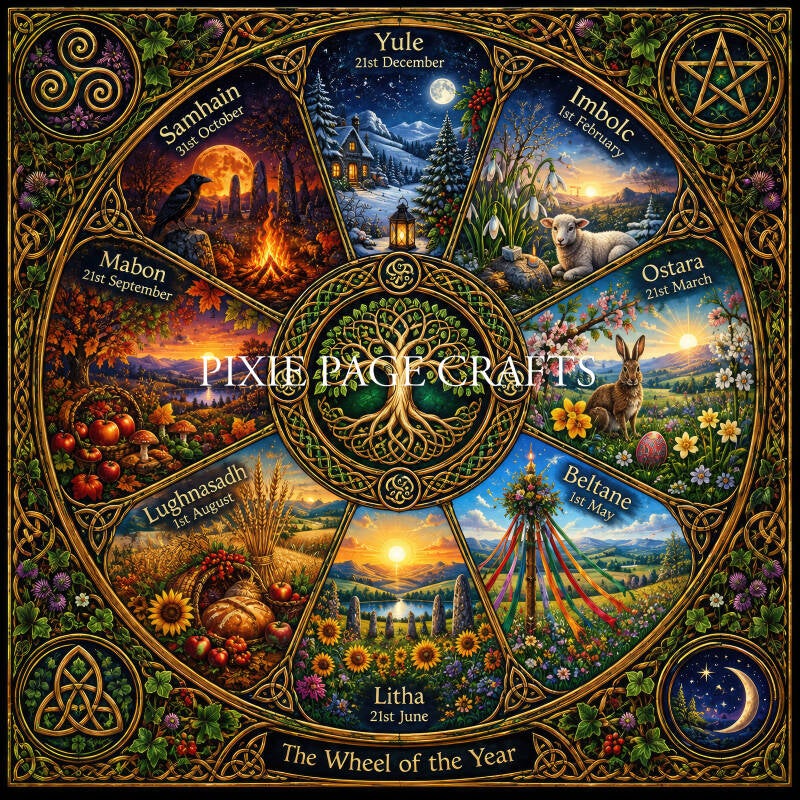
The modern eightfold system combines different traditions into a contemporary spiritual calendar.
That doesn't make it meaningless.
It simply means we should distinguish modern Pagan practice from ancient historical evidence.
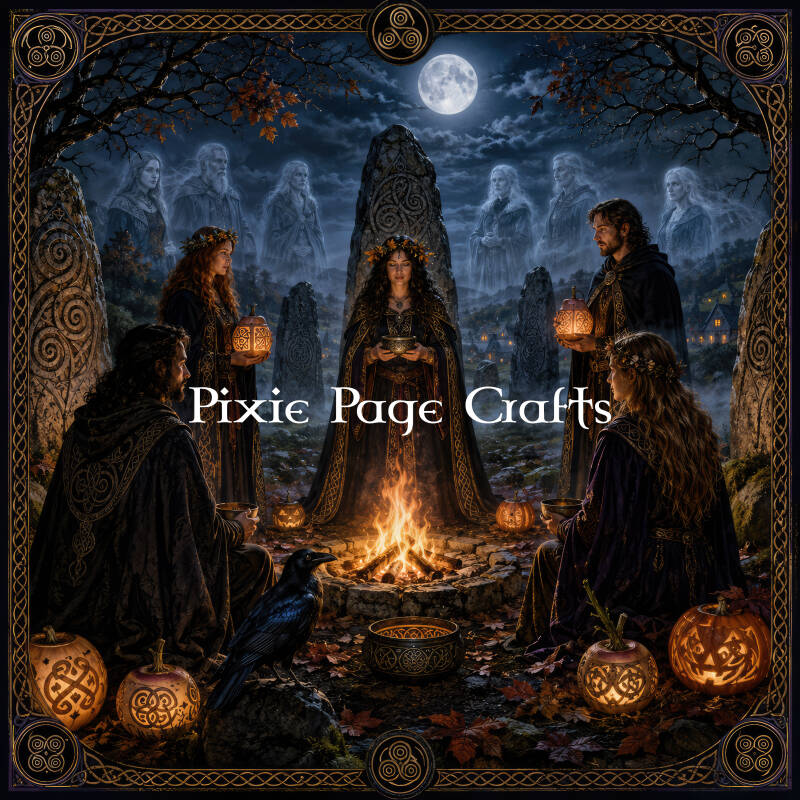
Samhain and the Coming of Winter
Of all the old seasonal festivals, Samhain is perhaps the most famous.
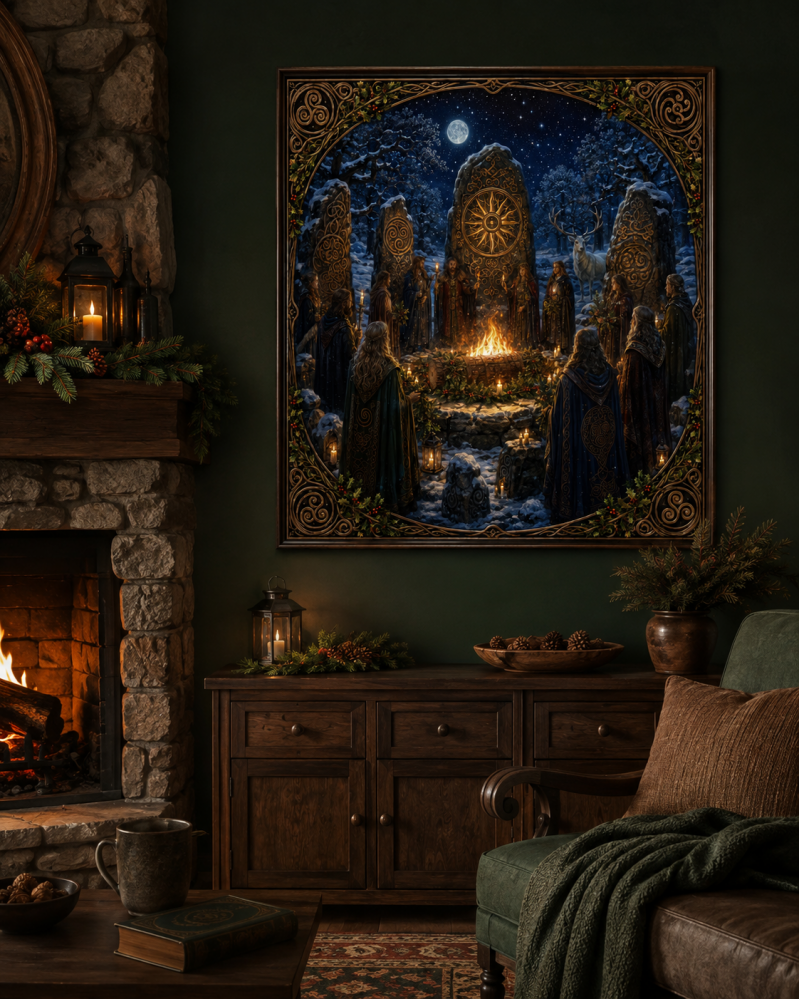
Traditionally associated with the beginning of winter in Ireland, it became surrounded by stories involving gatherings, supernatural encounters and unusual events.
It occurred at an important agricultural threshold. Summer was over. The harvest had largely been gathered.Livestock management changed. Darkness came earlier.
Winter lay ahead.
It is easy to understand why such a moment could become associated with boundaries and uncertainty.
Modern Pagans may use Samhain as a time for remembering ancestors, contemplating mortality and acknowledging the darker half of the year.
The popular claim that Samhain was simply “the Celtic festival of the dead” is an oversimplification, but connections between Samhain and supernatural activity certainly appear in Irish tradition.
Beltane and the Return of Summer
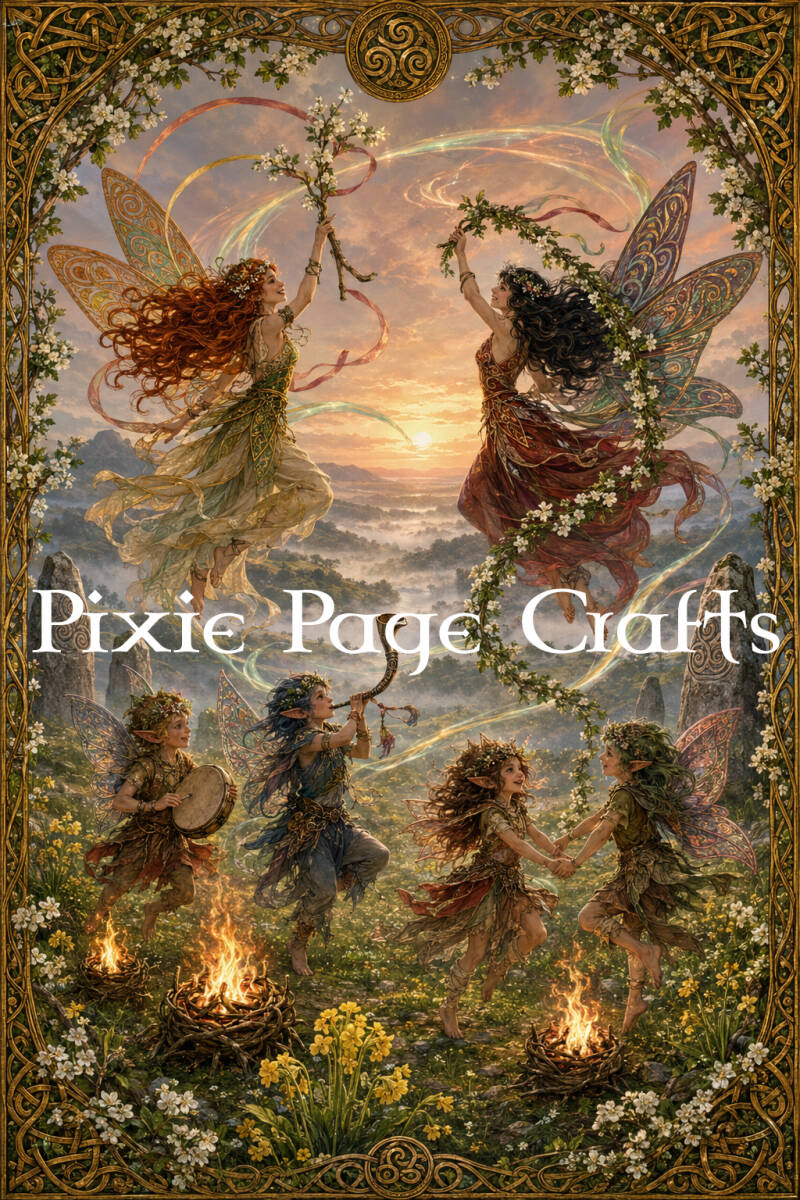
At the opposite side of the seasonal cycle lies Beltane, traditionally associated with the beginning of summer.
Fire is particularly important in descriptions of Beltane customs.
Historical Irish sources mention cattle being driven between fires, apparently for protection.
This illustrates another major aspect of traditional belief:
Ritual wasn't always separated from everyday survival.
Livestock meant food, wealth and security.
Protecting animals from disease or misfortune therefore mattered enormously.
Fire could consequently possess both practical and symbolic importance.
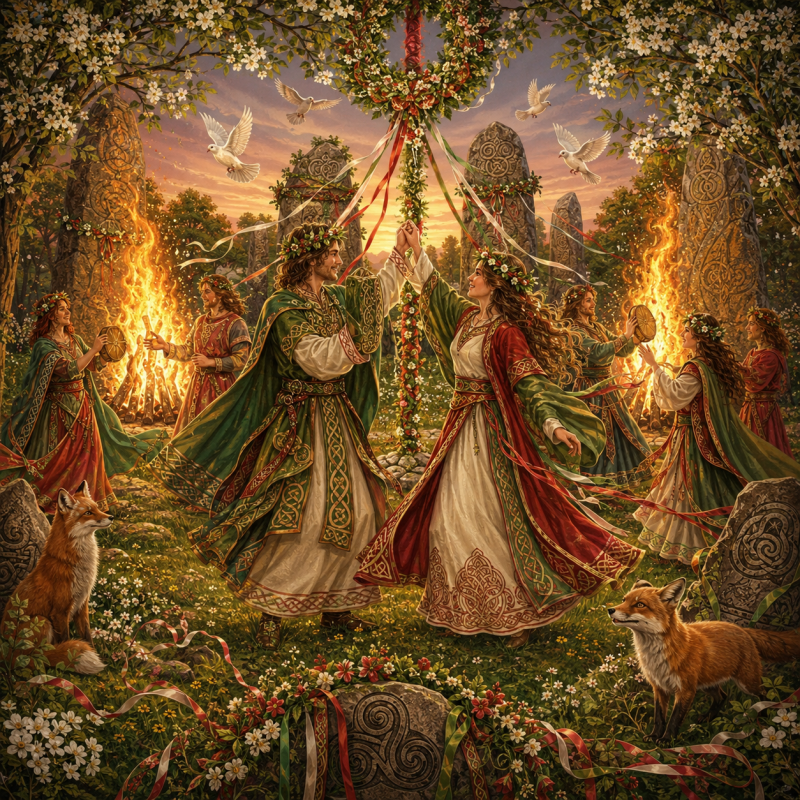
Modern Pagan Beltane celebrations often emphasise fertility, abundance, sexuality, flowers, fire and the flourishing natural world.
The Sun, Moon and Stars
Celestial cycles inevitably influenced societies whose lives were closely connected to seasonal change.
The lengthening and shortening of days affected agriculture and survival.
The Moon provided an obvious natural cycle.
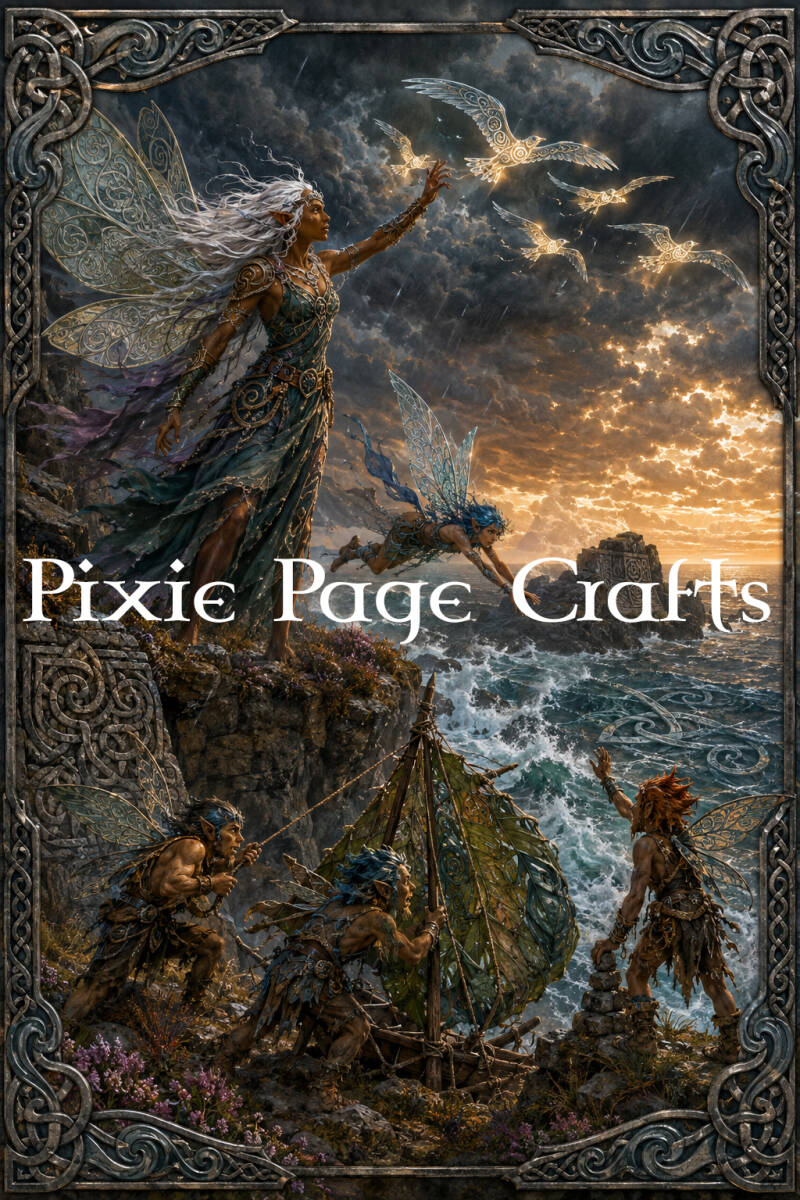
tars provided orientation and marked the passage of time.
Modern Paganism frequently gives the Sun and Moon extensive spiritual symbolism, although again we shouldn't assume every contemporary belief is an unchanged survival from ancient Celtic religion.
Nevertheless, the fundamental relationship is ancient:
Human beings watched the sky because the sky mattered.
Ancestors and the Dead
Remembering the dead is another recurring feature of human religion and folklore far beyond Celtic cultures.
Within Celtic and modern Pagan contexts, ancestors can hold particular significance.
Death doesn't necessarily represent complete disappearance.
A person's stories, family, land and memory remain.
Modern Pagan practitioners may create ancestor altars, light candles or remember deceased relatives during seasonal observances.
Historically, practices varied enormously, and we should avoid claiming a single Celtic doctrine concerning what happened after death.
But archaeological burial practices and ancient literary accounts indicate that death and whatever might lie beyond it carried substantial ritual significance.
Magic, Charms and Folk Belief
Not everything supernatural belonged to grand mythology.
Ordinary people also developed folk practices concerning protection, healing, luck, weather and misfortune.
Charms might protect a home. Plants could have medicinal and magical reputations. Certain actions were avoided because they supposedly brought bad luck. Other customs promised prosperity.
Christian prayers could eventually exist alongside practices whose origins were much older or difficult to determine.
This mixture is important because folklore isn't preserved inside neat historical boxes.
A custom might begin in one period, change meaning in another and survive centuries later for reasons completely different from its original purpose.
Christianity Didn't Simply Erase Everything
The conversion of Celtic-speaking regions to Christianity didn't cause every previous tradition to disappear overnight.
Instead, cultures adapted.
Old places received new associations.
Stories were retold.
Supernatural beings remained in folklore.
Seasonal customs continued in altered forms.
And Christian scribes eventually recorded some of the medieval Irish and Welsh literature through which we know these stories today.
This creates a fascinating paradox.Much of what survives of medieval Celtic mythology survives because Christian writers preserved it.
We therefore shouldn't imagine Celtic Paganism and Christianity as two completely sealed worlds with nothing passing between them.
Centuries of cultural exchange transformed both folklore and popular custom.
Modern Celtic Paganism
Today, people encounter Celtic spirituality through several different routes.
Some practise forms of Celtic Reconstructionist Paganism, attempting to build modern religious practice using historical, archaeological and literary evidence.
Others practise Druidry. Some follow Wicca or broader eclectic Pagan paths while incorporating Celtic deities, festivals or imagery.
And many people who aren't religious at all simply feel a strong connection with Celtic mythology, folklore, wildlife and landscape.
Modern Paganism is therefore not one religion. It encompasses numerous traditions and personal approaches.
Why These Beliefs Still Fascinate Us
Perhaps the enduring appeal of Celtic and Pagan folklore isn't really about escaping into fantasy.
It is about reconnecting with things modern life can make surprisingly easy to overlook.