Celtic Animals in British & Irish Folklore
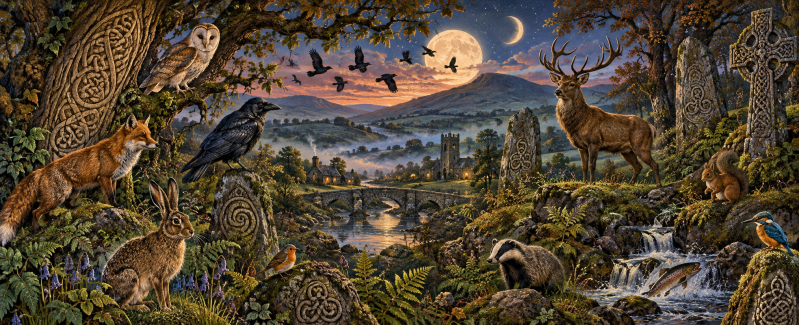
Celtic animals have occupied an important place in the mythology and folklore of Britain and Ireland for centuries. From the forests and mountains to rivers, coastlines and ancient landscapes, animals have inhabited more than the natural world — they have also lived within our stories.
From the mysterious hare and watchful owl to the raven, stag, fox and wild boar, animals appear throughout Celtic mythology and the folklore of Britain and Ireland. Some were associated with particular gods and legendary figures, while others became connected with transformation, prophecy, death, healing, wisdom or the mysterious world beyond our own.
Yet the meanings attached to these animals are rarely as simple as modern lists of “Celtic animal symbolism” might suggest. Traditions differed between Ireland, Wales, Scotland, England and other Celtic-speaking regions, and stories changed as they were told and retold across generations.
This guide explores the animals and birds found in Celtic mythology and British and Irish folklore, looking at the surviving stories, traditional beliefs and later interpretations that have shaped the way we see them today.
Follow the individual animal guides below to discover their stories, folklore and place within the landscapes and traditions of Britain and Ireland.
What Role Did Animals Play in Celtic Mythology?
Animals appear throughout the surviving mythology and folklore of Ireland, Wales and Britain, sometimes as ordinary creatures and sometimes as beings connected with transformation, prophecy or the Otherworld. Their roles were rarely as simple as having one fixed symbolic meaning. A raven encountered in one story might have very different associations from a raven appearing in another tradition.
Stags could lead hunters into unfamiliar or supernatural landscapes, swans appear in Irish tales of transformation, while salmon became closely associated with wisdom and knowledge. Hares, wolves, horses, boars and birds also appear throughout stories shaped by the landscapes and communities in which they were told.
Rather than treating these animals as a modern list of “Celtic animal meanings”, the pages below explore the stories, traditions and historical sources behind them.
Celtic Animals and Their Stories
There is no single list of animals that can be described as exclusively “Celtic”. The surviving traditions of Ireland, Wales and Britain contain many different animals whose roles vary between stories, places and periods. Some are associated with transformation or the Otherworld, while others appear as companions, hunted animals, omens or creatures possessing unusual knowledge.
Among the animals that appear prominently in Celtic mythology and later folklore are the stag, raven, swan, salmon, hare, horse, boar and wolf. Exploring their individual stories gives a much richer picture than assigning each animal a single modern symbolic meaning.
Animals in Celtic Mythology & British and Irish Folklore
Across Britain and Ireland, animals have occupied a remarkable place in Celtic mythology and folklore for centuries. Some appear in the earliest surviving Irish and Welsh stories, while others became associated with local legends, omens, supernatural encounters and beliefs passed between generations. The animals gathered here are not simply symbols with fixed meanings; their stories often changed from one region and period to another.
Explore the collection below to discover the folklore surrounding Britain and Ireland’s wildlife — from the mysterious hare and prophetic raven to the wise salmon, powerful stag, elusive fox and many other creatures whose stories became entwined with the landscape, the Otherworld and the people who lived alongside them.
Animals in Celtic mythology and folklore often appear as more than ordinary creatures. They may act as messengers, guides, symbols of sovereignty and transformation, or as creatures associated with the Otherworld. Explore the animals below to discover the stories, beliefs and traditions connected with each one across Celtic, British and Irish folklore.
Explore Celtic Animal Folklore
Explore individual guides to some of the most important animals in Celtic, British and Irish folklore, including the hare, raven, stag, swan, barn owl, badger, eagle and many more. Each guide explores the myths, traditional beliefs and symbolism surrounding these animals and their place within the landscapes and stories of Britain and Ireland.
Explore the Animals & Birds
The Hare
Few animals occupy such a curious place in the folklore of Britain and Ireland as the hare. Fast, elusive and often seen at dawn or dusk, the hare became entangled with stories of transformation, witchcraft, fertility, the supernatural and the mysterious boundary between the human and animal worlds.
From Irish and Welsh tradition to centuries of British folk belief, the hare's reputation has changed considerably over time. Behind its modern associations lies a fascinating mixture of mythology, recorded folklore and later interpretation.

The Barn Owl
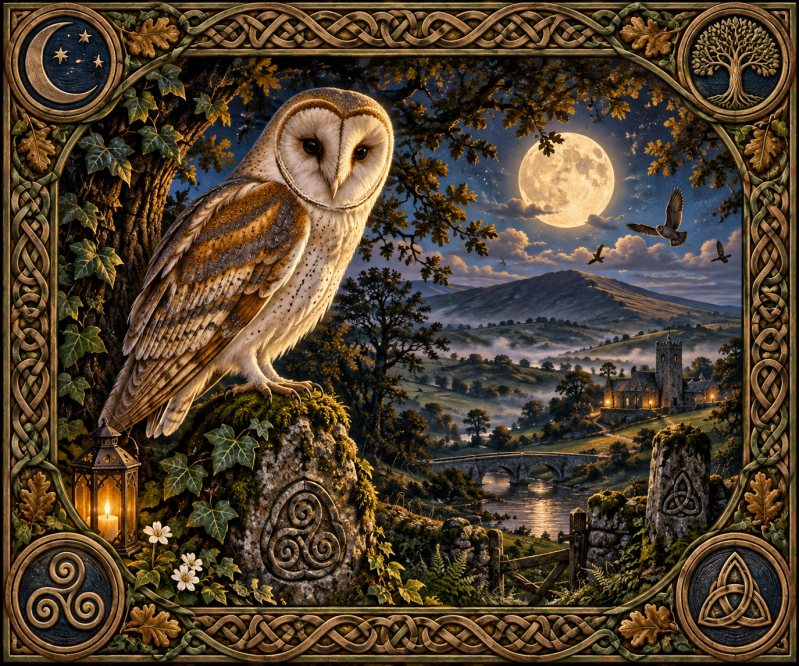
Silent, pale and unmistakable, the barn owl has inspired stories and beliefs for centuries. Its nocturnal habits, ghostly appearance and almost soundless flight have helped connect owls with mystery, death, wisdom and the supernatural in folklore around the world.
In Britain and Ireland, owl traditions range from omens and old rural superstitions to stories surrounding the mysterious creatures of the night. But separating genuine historical folklore from later interpretations reveals a story far more interesting than simple lists of modern symbolism suggest.
The Raven
Few birds have gathered as many stories around them as the raven. Intelligent, watchful and unmistakable, ravens appear throughout the mythology and folklore of Britain and Ireland, often in stories concerned with battle, prophecy, death and the supernatural.
In Irish mythology, ravens and other corvids are particularly associated with tales surrounding warfare and figures such as the Morrígan. Elsewhere, ravens appear in traditions ranging from Welsh legend to later British folklore. Over centuries these stories have helped create the raven's enduring reputation as a bird standing somewhere between the everyday landscape and the mysterious world of myth.


The Fox
Few British animals possess a reputation quite like the fox. Clever, elusive and remarkably adaptable, the red fox has lived alongside people for centuries while remaining a creature that seems to belong firmly to the wild.
Across British and Irish folklore, foxes appear in stories involving cunning, transformation, witchcraft and encounters with the supernatural. Some traditions grew from the fox's real behaviour — its intelligence, nocturnal habits and ability to seemingly appear and disappear through the landscape — while others transformed the animal into something far more mysterious.
The Stag
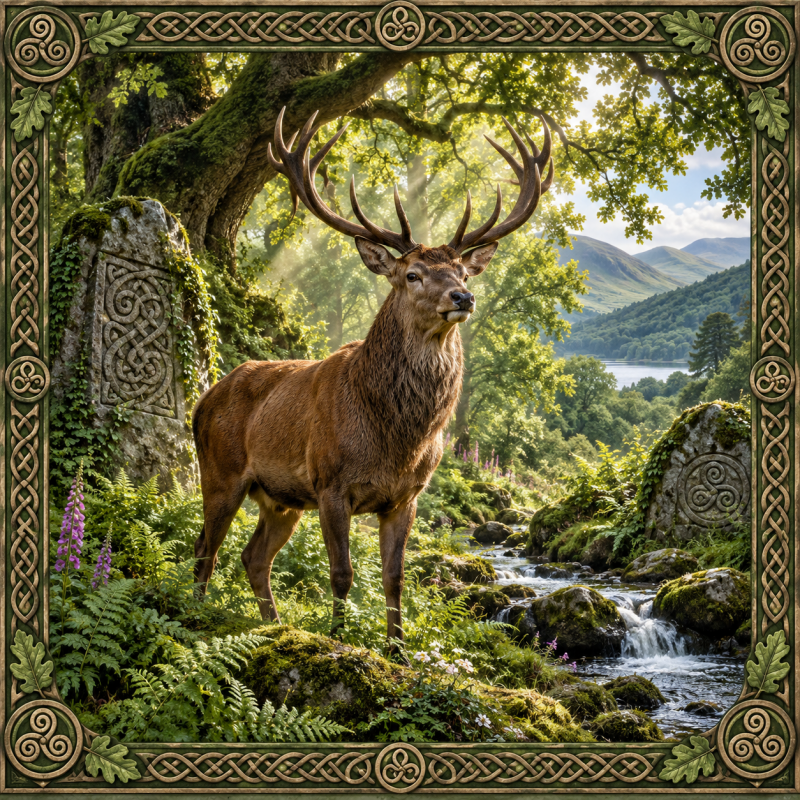
Few animals possess the presence of a mature stag. With its branching antlers, autumn roar and association with forests and wild mountain landscapes, the stag has inspired mythology, folklore and symbolism across Britain and Ireland for centuries.
Deer appear in Irish and Welsh stories involving hunting, transformation and encounters with the supernatural. From Fionn and Oisín to Pwyll's meeting with Arawn, the pursuit of deer can lead characters beyond the familiar world. Ancient antlered imagery associated with figures such as Cernunnos has added another mysterious layer to the stag's story.

The Swan
Graceful, powerful and unmistakable, the swan occupies a remarkable place in Irish mythology and later British and Irish tradition. Its ability to move between water, land and sky made it a particularly evocative creature for stories involving transformation and the supernatural.
From the tragic Children of Lir to the extraordinary story of Óengus and Caer Ibormeith, swans appear in tales of enchantment, love, separation and changing form. Later traditions added further layers, including royal swans, the legendary “swan song” and modern symbolism surrounding love and devotion.
The Wolf
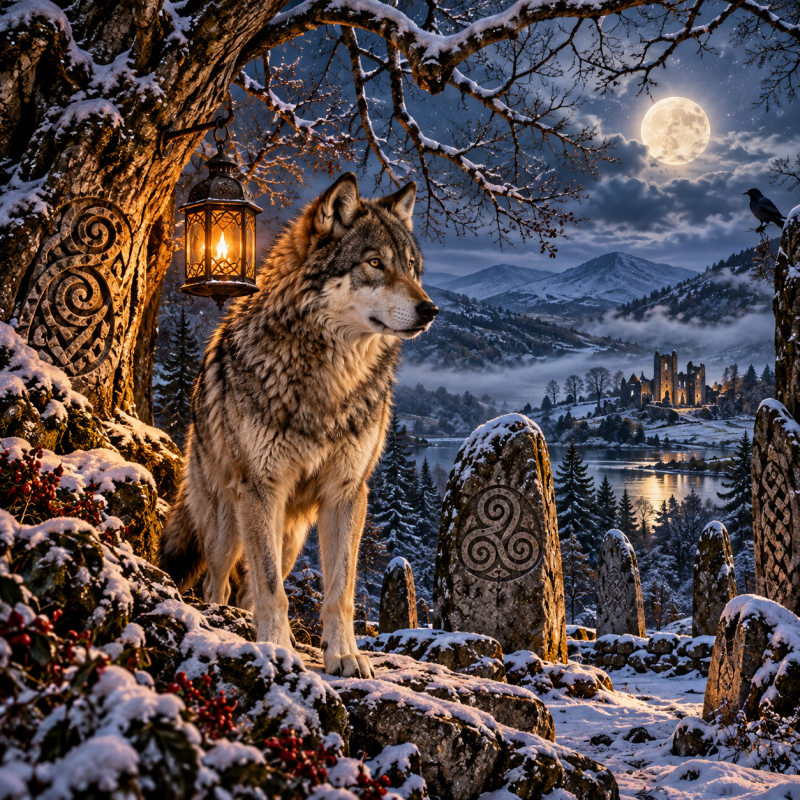
Once a real inhabitant of Britain and Ireland, the wolf occupied a fascinating place between the settled human world and the wilderness beyond. Feared as a predator but admired for its intelligence, endurance and social nature, the wolf survived in folklore long after it disappeared from the landscape.
Irish tradition preserves some particularly extraordinary stories. The medieval Werewolves of Ossory tells of humans condemned to live temporarily in wolf form, while later traditions connect wolves with saints, transformation and the boundaries between human and animal. Today the wolf has also become a powerful modern symbol of wilderness, loyalty, instinct and family.
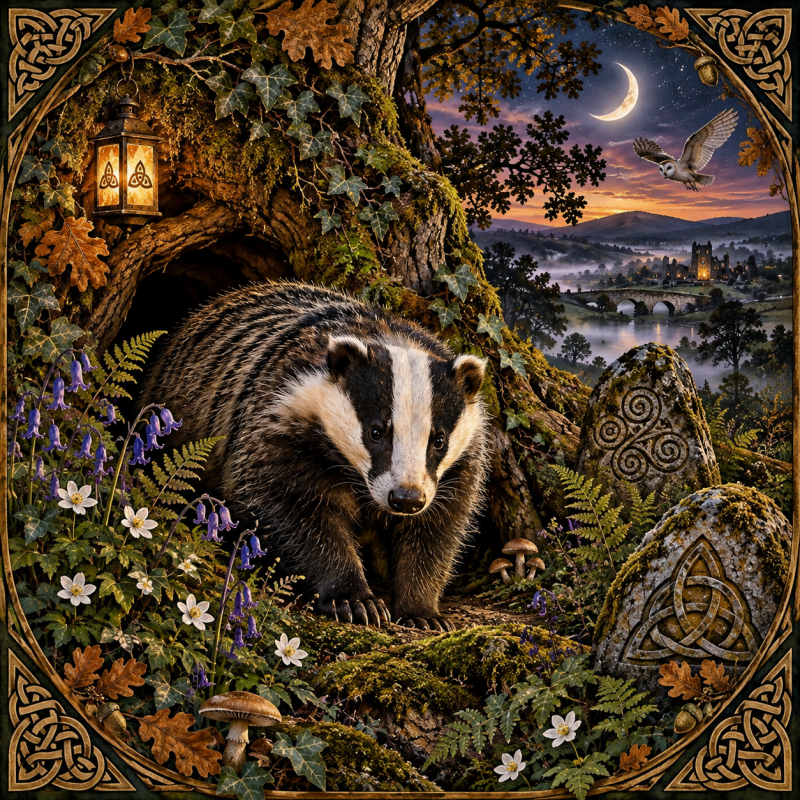
The Badger — Guardian of the Hidden Earth
Secretive, powerful and deeply connected with the earth, the badger has long inhabited the edges of British and Irish folklore. From early Irish tradition to rural beliefs surrounding its ancient underground setts, discover how this elusive animal became associated with strength, protection and the mysterious world beneath our feet.
Explore Badger Folklore, Mythology & Symbolism →
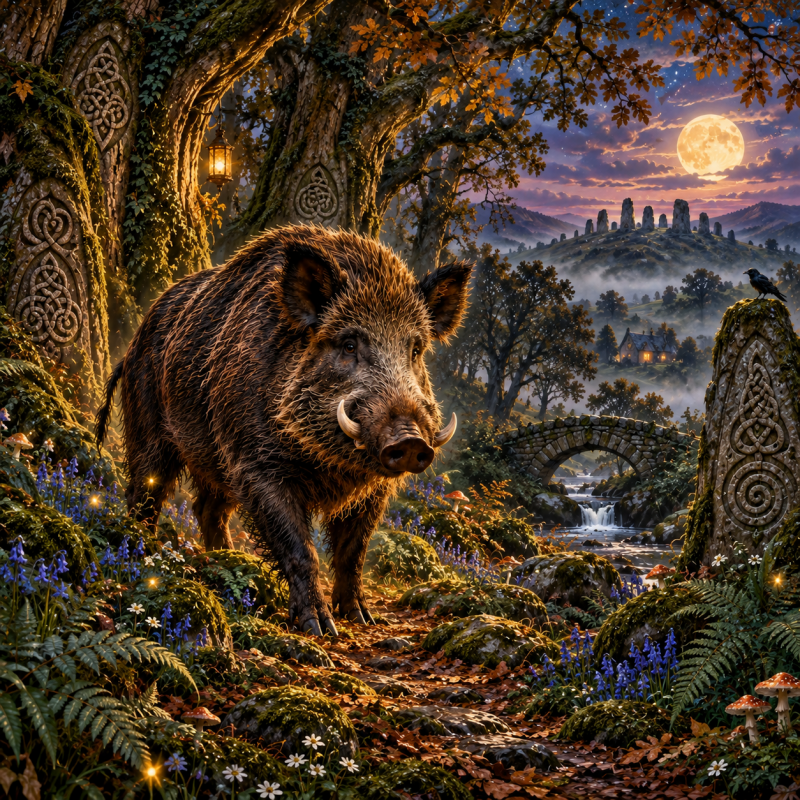
The Wild Boar — Beast of the Ancient Hunt
Powerful, dangerous and sometimes supernatural, the wild boar charges through some of the great stories of medieval Britain and Ireland. From the extraordinary Welsh hunt of Twrch Trwyth to Irish tales of feasting, transformation and heroic rivalry, discover why the boar became such a formidable creature of legend.
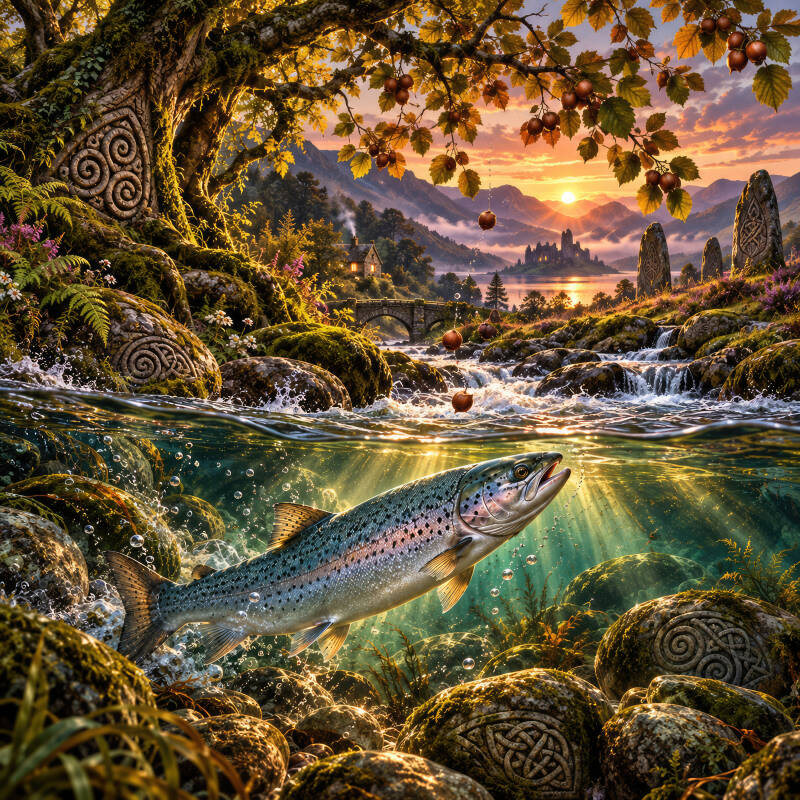
The Salmon — Keeper of Ancient Wisdom
Swimming through the ancient waters of Irish and Welsh tradition, the salmon became associated with extraordinary knowledge, memory and wisdom. From Fionn mac Cumhaill and the famous Salmon of Knowledge to the ancient Salmon of Llyn Llyw, discover why this remarkable fish occupies such a fascinating place in Celtic storytelling.
Explore Salmon Folklore, Celtic Mythology & the Salmon of Knowledge →
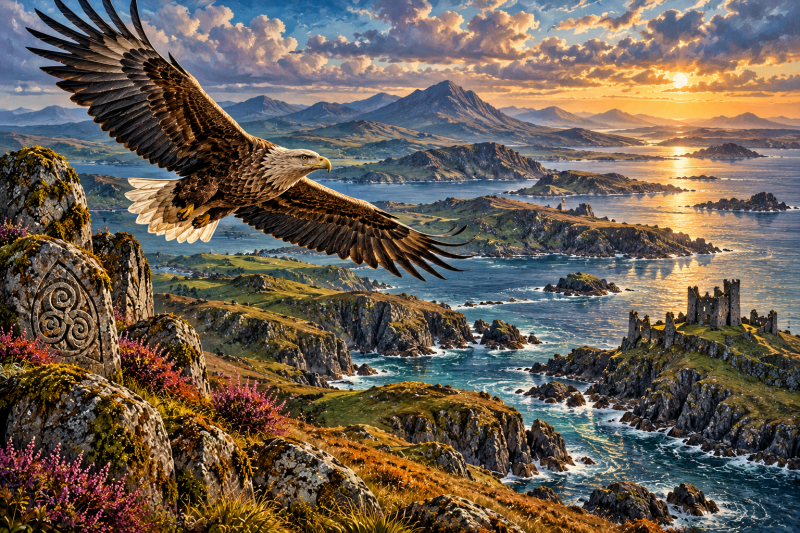
The Eagle — Ancient Witness of the Landscape
High above the mountains, forests and coastlines of Britain and Ireland, the eagle has inspired stories of extraordinary age, transformation and supernatural knowledge. Medieval Welsh tradition remembers the ancient Eagle of Gwernabwy, while Irish storytelling places the great bird within remarkable tales of transformation across the ages.
Explore Eagle Folklore, Celtic Mythology & Ancient Legends →
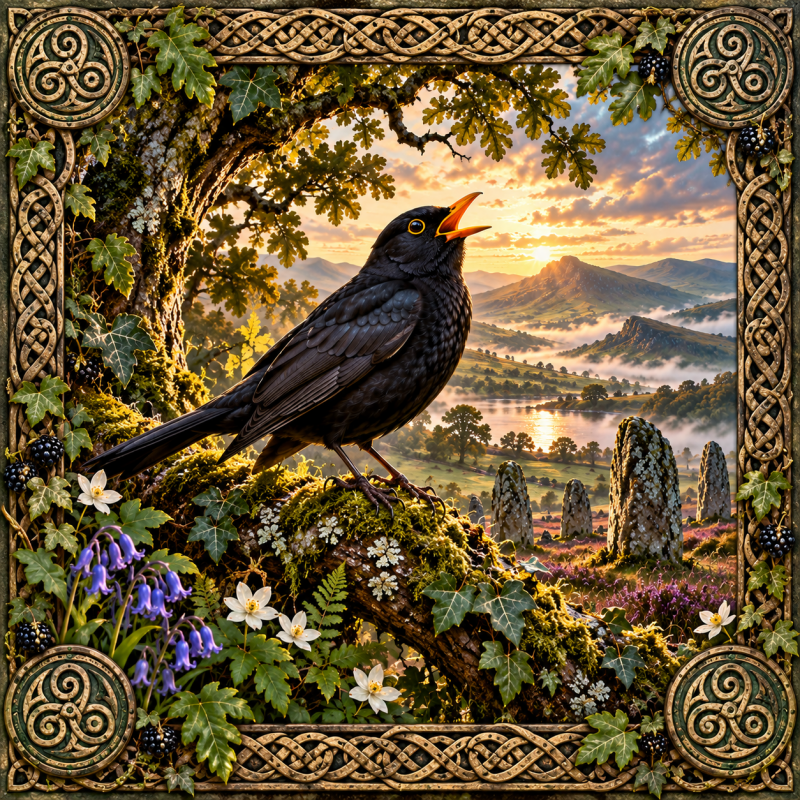
The Blackbird — Ancient Keeper of Memory
In medieval Welsh tradition, the blackbird appears as one of the oldest creatures in the land. The Blackbird of Cilgwri, encountered during the search for Mabon ap Modron in Culhwch and Olwen, has lived for so long that it describes wearing away a smith's anvil with its beak. Together with ancient stags, owls, eagles and salmon, the blackbird belongs to a remarkable tradition in which animals preserve memories stretching far beyond human lifetimes.
With its beautiful song, dark plumage and presence in woodland, hedgerows and gardens, the blackbird has also become associated with mystery, ancient memory and the hidden life of the landscape. Its story offers a wonderful example of how an everyday British bird can occupy an extraordinary place in Celtic and Welsh folklore.
Explore Blackbird Folklore, Welsh Mythology & Ancient Legends →
The Horse — Between This World and the Otherworld
Few animals held such importance in the ancient Celtic world as the horse. Horses represented wealth, movement and status, but in mythology they could also carry their riders beyond the boundaries of the ordinary world. From Rhiannon's mysterious white horse in Welsh tradition to Macha's extraordinary race in Irish mythology, horses appear alongside some of the most memorable figures in Celtic storytelling.
Folklore also reveals a darker side. Scotland and Ireland tell of supernatural water horses capable of luring travellers towards lakes and rivers, while the ancient Uffington White Horse remains carved into the English landscape thousands of years after its creation.
Explore Horse Folklore, Celtic Mythology & Ancient Legends →

Explore Sacred Trees & Plants in British & Irish Folklore
Animals were not the only inhabitants of the natural world to hold special meaning in British, Irish and Celtic folklore. Ancient oaks, mysterious yews, protective rowan trees and flowering hawthorns all became part of stories about magic, healing, sacred places and the Otherworld.
Discover how trees and plants shaped traditional beliefs, from the sacred groves of ancient Britain to the fairy trees of Ireland, in our Trees & Plants in British, Irish & Celtic Folklore collection.