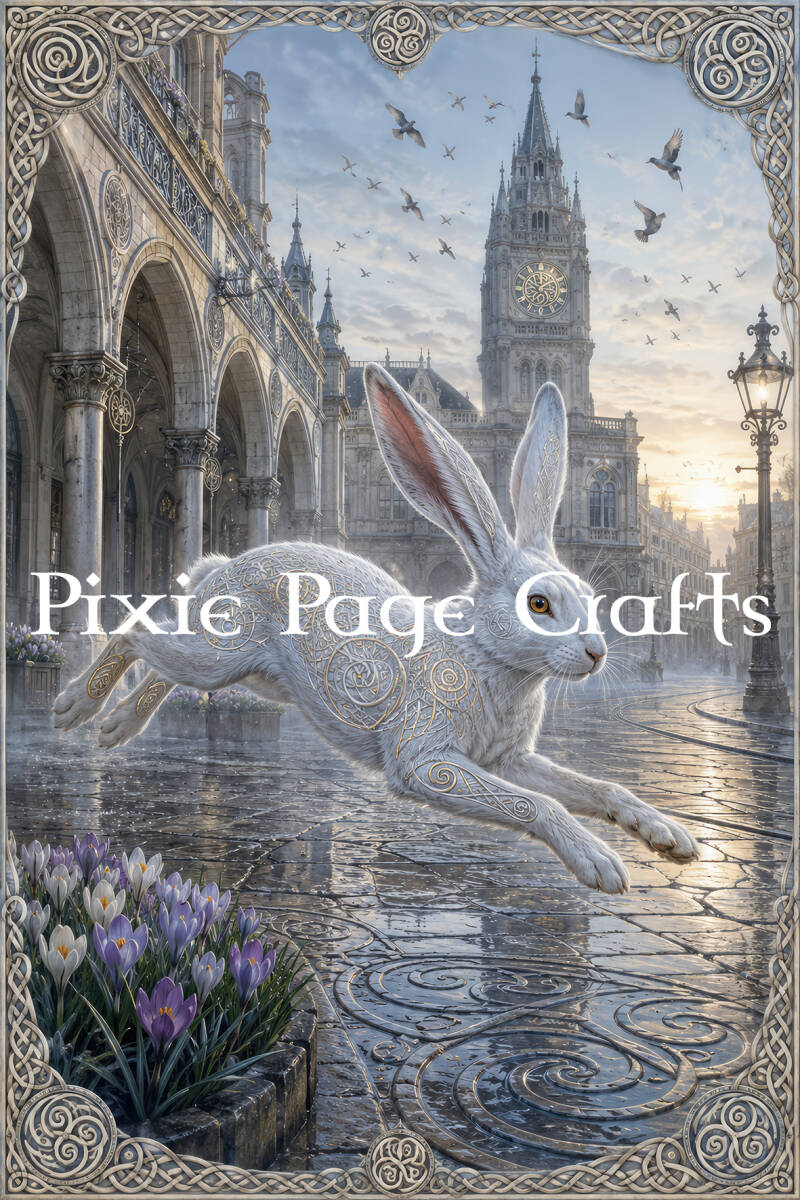
The Hare
The Hare in Celtic and Pagan Folklore
The hare has long been one of the most mysterious animals of the British and Irish countryside, and it is easy to understand why it became surrounded by folklore. Unlike the domesticated rabbit, the hare remains unmistakably wild: fast, alert and often encountered alone in open countryside. Its habit of crouching almost invisibly before suddenly racing away gives it an elusive quality. In Celtic-inspired and modern Pagan symbolism, these characteristics have helped the hare become associated with freedom, intuition, transformation and the untamed power of nature.
One of the hare's strongest connections is with spring, fertility and renewal. Hares become particularly noticeable during their breeding season, when their famous energetic chases and “boxing” behaviour can be seen across fields. To people whose lives were governed by agriculture and the changing seasons, the return of vigorous animal activity after winter naturally carried great significance. Modern Pagan traditions therefore frequently use the hare as an emblem of new beginnings, fertility, abundance and the awakening of the earth, particularly around the spring equinox.
The hare also has a fascinating place in the surviving historical record. The Roman writer Julius Caesar claimed that some Britons considered it contrary to divine law to eat hares, along with hens and geese, although they kept them
for pleasure. Caesar was an outside observer and his account shouldn't be treated as proof that every ancient Briton regarded hares as sacred, but it does suggest that these animals could possess an unusual cultural status. Archaeology has added further intriguing evidence, including carefully buried Iron Age hares, strengthening the possibility that hares sometimes held meanings extending beyond their value as food.
In later British and Irish folklore, the hare developed particularly strong associations with witchcraft, magic and shape-shifting. Stories told of witches taking the form of hares in order to travel unseen, escape pursuers or steal milk from cattle. In Ireland especially, supernatural women and witches could appear in hare form, and harming a mysterious hare might reveal that an apparently ordinary animal was something very different. Such tales turned the hare into a creature occupying the uncertain boundary between human and animal, natural and supernatural.
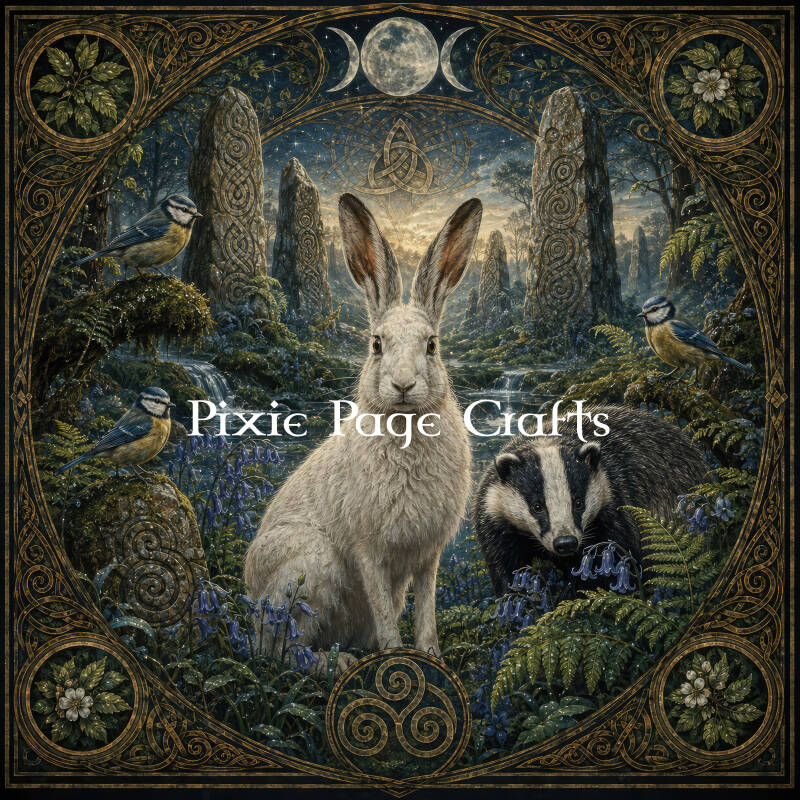
The hare's connection with the Moon is another major element of modern Pagan symbolism. A hare is most likely to be encountered around dawn, dusk or during the quieter hours when moonlight transforms the landscape, making the pairing visually irresistible. The Moon's repeating cycle of waxing, fullness, waning and return makes it a powerful symbol of change and renewal, while the hare's association with fertility and seasonal rebirth complements it beautifully. Although claims of a single ancient “Celtic moon-hare religion” go beyond the historical evidence, the Moon and hare have become deeply compatible symbols within contemporary Pagan spirituality.
The hare can also be understood as a liminal animal — a creature of boundaries. It lives above ground yet hides in shallow depressions called forms; it is frequently encountered around the transitional hours of dawn and dusk; and folklore repeatedly allows it to cross the boundary between animal and human through shape-shifting. Celtic mythology and later folklore are filled with places and moments where ordinary boundaries weaken — rivers, wells, ancient mounds, twilight and seasonal turning points. The elusive hare fits naturally into this world and can therefore symbolise intuition, hidden knowledge and passage between the familiar and mysterious.
Another reason the hare remains such a powerful Pagan symbol is its absolute wildness and independence. Humans domesticated rabbits, but hares have resisted becoming ordinary domestic companions. They belong to fields, moorland and open countryside, relying upon speed, awareness and instinct for survival. In modern nature-based spirituality, this makes the hare an appealing representation of personal freedom, self-reliance and trusting one's instincts. It does not conquer the landscape through strength; it survives through awareness, adaptability and knowing precisely when to remain still and when to run.
Ultimately, the hare's significance comes from the way real natural behaviour and centuries of storytelling have become intertwined. It can represent spring and fertility, yet also moonlight and mystery; vulnerability, yet extraordinary speed; the physical countryside, yet stories of witches and transformation. We should be careful not to present every modern interpretation as an established belief shared by all ancient Celtic peoples, because the historical traditions were far more diverse. But that complexity makes the hare even more compelling: in Celtic and Pagan-inspired folklore it stands at the edge of the wild world, a symbol of renewal, freedom, intuition and transformation — forever appearing briefly from the grass before disappearing once again into the mystery of the landscape.