The Fox
The Fox in Celtic and Pagan Folklore
The fox has long been one of the most intriguing animals of the British and Irish countryside, admired for its intelligence, adaptability and ability to appear and disappear almost without warning. Often most active around dusk and during the night, the fox inhabits that mysterious period when daylight gives way to darkness. In Celtic-inspired folklore and modern Pagan symbolism, these characteristics have helped make the fox an emblem of cunning, independence, awareness, adaptability and the hidden mysteries of the natural world.
One of the fox's greatest symbolic strengths comes from its remarkable ability to survive through intelligence rather than physical power. A fox is neither the largest nor the strongest predator in the landscape, yet it is extraordinarily successful. It listens, watches and adjusts its behaviour according to its surroundings. This makes it a powerful modern Pagan symbol for resourcefulness, patience and knowing when to act. The fox reminds us that strength does not always mean confronting an obstacle directly; sometimes wisdom means finding another path around it.
The fox is also strongly associated with twilight, darkness and the boundary between worlds. Celtic mythology and later folklore frequently give special importance to liminal places and moments — dawn and dusk, rivers and shorelines, doorways, seasonal transitions and places where the familiar landscape begins to feel different.
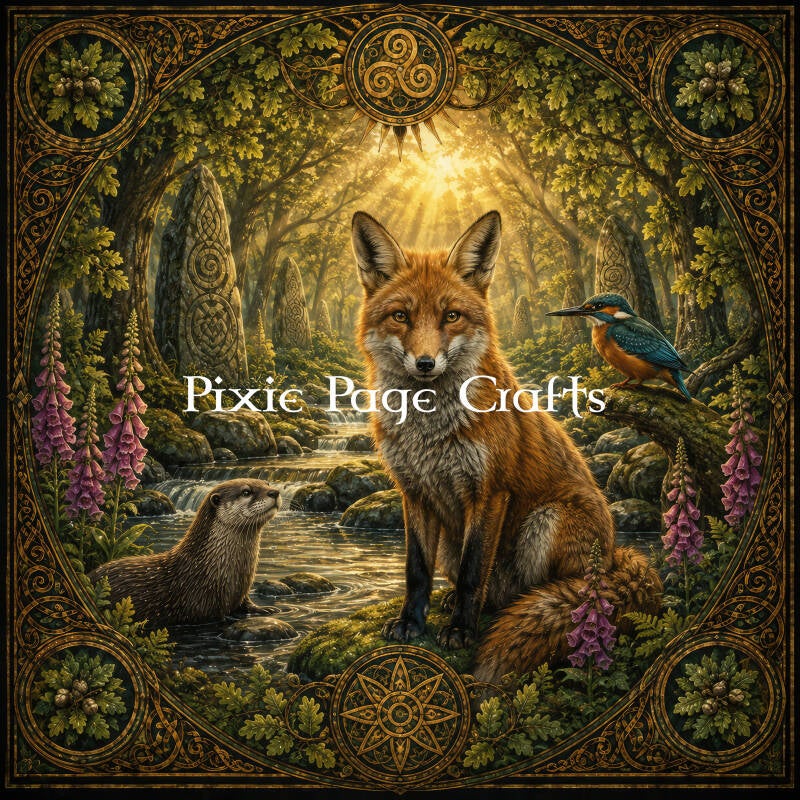
The fox naturally belongs to this world of boundaries. Seeing its red coat briefly illuminated at the edge of a woodland before it vanishes into the shadows gives the animal an almost supernatural quality, making it an ideal symbol of transition, intuition and travelling between the known and unknown.
Later British and Irish folklore also connected foxes with cunning, magic and occasionally shape-shifting, although these traditions vary considerably by region and period. The fox's ability to evade hunters and seemingly outwit those pursuing it naturally encouraged stories portraying it as an unusually clever creature. Folktales often use foxes to represent intelligence and trickery, sometimes allowing the smaller animal to triumph over creatures possessing far greater strength. Rather than simply representing dishonesty, the folkloric fox can therefore embody cleverness, survival and the ability to overcome adversity through wit.
The fox's brilliant red coat gives it another powerful symbolic dimension. Against the greens and browns of the countryside, a fox can appear almost like a flash of fire moving across the landscape. In modern Pagan-inspired interpretation, this lends itself beautifully to associations with fire, vitality, passion, courage and transformation. Fire itself destroys but also creates the conditions for renewal, making the fiery fox an effective symbol for someone passing through change and emerging stronger, wiser or more independent on the other side.
There is also something deeply significant about the fox's relationship with the wild landscape. Foxes make their homes in woodland, fields, hillsides and hedgerows, but they have also adapted remarkably well to villages, towns and cities. That adaptability gives the fox a particularly relevant modern meaning. It represents the ability of nature to survive even when humans dramatically alter the landscape. For modern Pagans and people drawn to nature-based spirituality, the fox can therefore symbolise resilience and the enduring presence of the wild, reminding us that nature has not disappeared simply because we have built roads and houses around it.
The fox can also represent observation and intuition. Anyone who has encountered a wild fox knows how alert it can be, constantly listening and assessing its surroundings before deciding whether to remain or disappear. Symbolically, this becomes the ability to notice what others overlook and to trust instinct when circumstances feel uncertain. In Celtic and Pagan-inspired artwork, a fox standing beside an ancient tree, moonlit path or circle of stones can therefore become more than simply an animal within the scene. It becomes a guide at the edge of the unknown, quietly watching and seemingly aware of things hidden from ordinary human sight.
Ultimately, the fox's significance within Celtic-inspired and modern Pagan folklore comes from a combination of real animal behaviour, later folk tradition and contemporary spiritual interpretation. We should be cautious of claims that all ancient Celtic peoples regarded the fox as one specific sacred symbol, because there is little evidence for such a universal belief. Its symbolism is far richer when treated honestly: the fox is a creature that survives through intelligence, adapts when its world changes and confidently
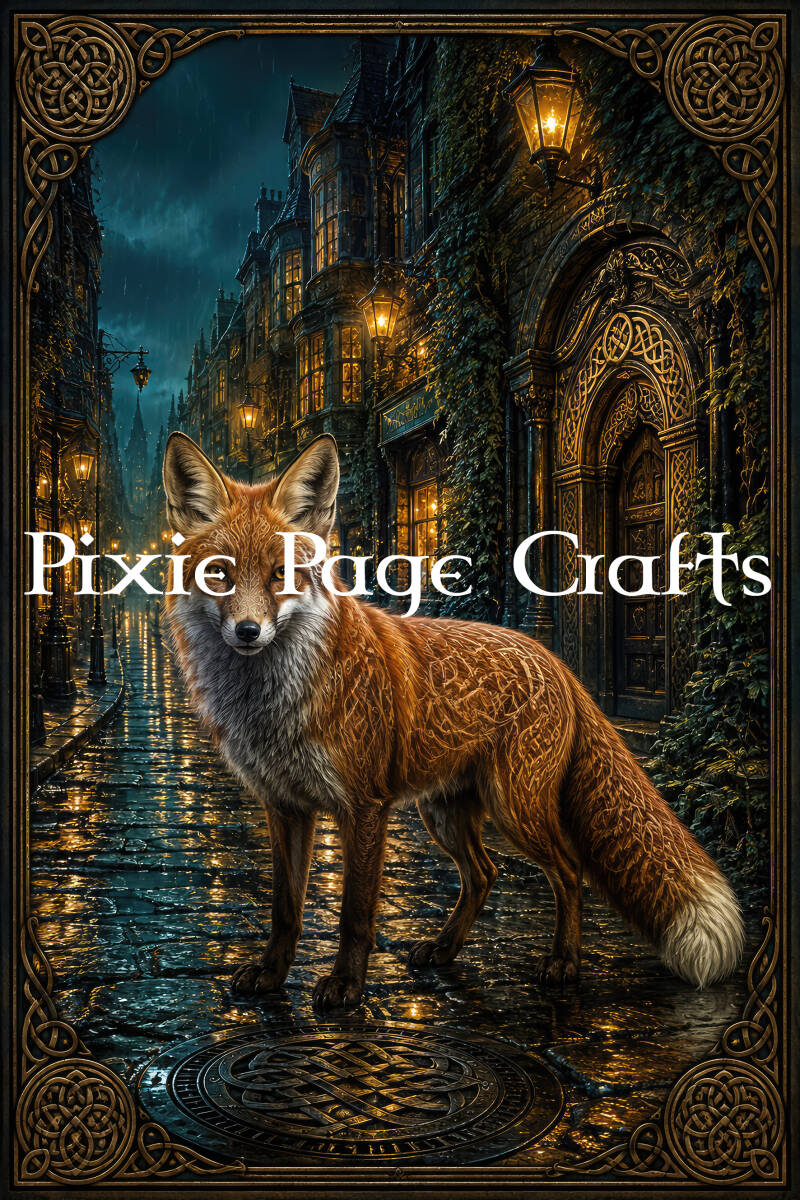
travels through the shadows. It represents cunning, resilience, freedom, intuition, transformation and adaptability — a reminder that when the familiar path disappears, sometimes the greatest strength lies in being clever enough to find another way through.