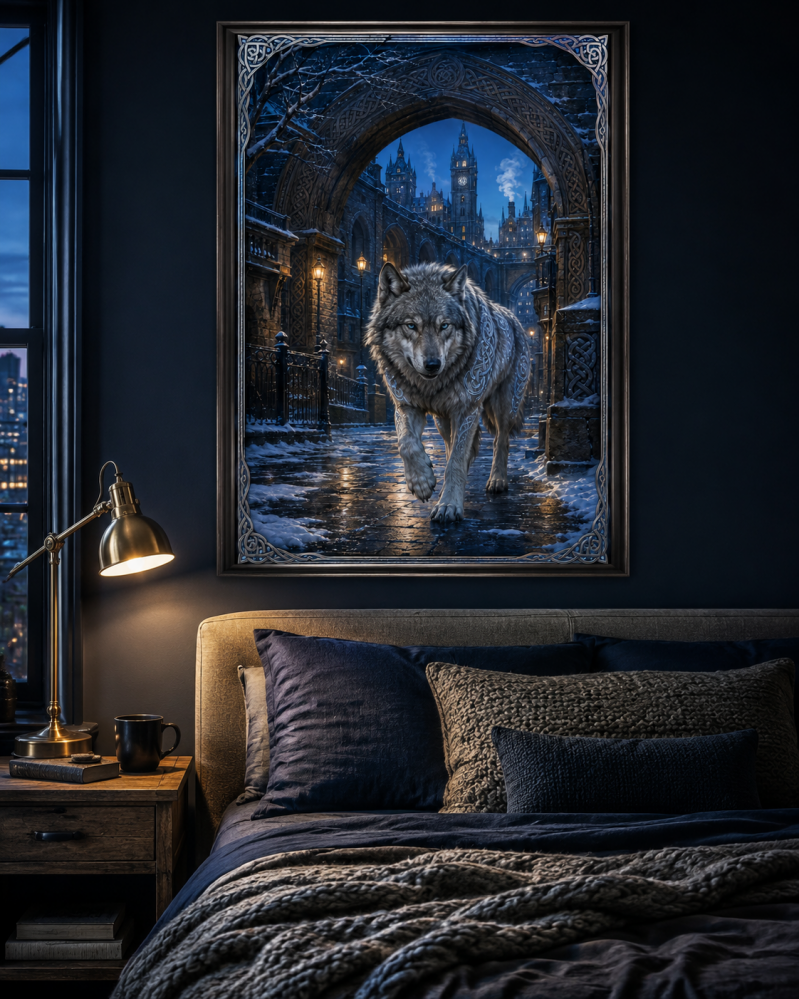
Celtic & Pagan Folklore
Belief in Celtic and Pagan Folklore: A World Where Nature, Spirits and the Otherworld Meet
Celtic and Pagan folklore is filled with stories of sacred landscapes, mysterious beings, powerful animals, ancient gods, seasonal celebrations and places where the boundary between the human world and the supernatural seems remarkably thin.
But understanding these beliefs requires a little care. There was never one single “Celtic religion” practised identically everywhere, nor was there one universal collection of Pagan beliefs. The peoples we now describe as Celtic lived across different regions and periods, while much of the mythology that survives from Ireland and Wales was written down centuries after Christianity had become established.
What remains is an extraordinary mixture of ancient traditions, medieval literature, local folklore, later customs and modern Pagan interpretations.
And at the heart of much of it is a powerful idea:
The landscape is more than simply scenery.
Mountains, rivers, springs, forests, animals and the changing seasons could carry stories, identities and supernatural significance.
A World Filled With the Supernatural
To understand Celtic folklore, it helps to imagine experiencing the countryside without modern explanations for everything around you.
A strange light appears over a marsh. An owl cries from the darkness. Mist suddenly fills a valley. An ancient tree stands alone beside a spring. A person disappears. Crops unexpectedly fail. Someone dreams of a relative shortly before learning that they have died.
Today we might search for scientific explanations.
Earlier communities often interpreted unusual experiences through traditions that had been passed between generations.
The supernatural wasn't necessarily imagined as belonging to some distant fantasy universe. It could exist alongside everyday life.
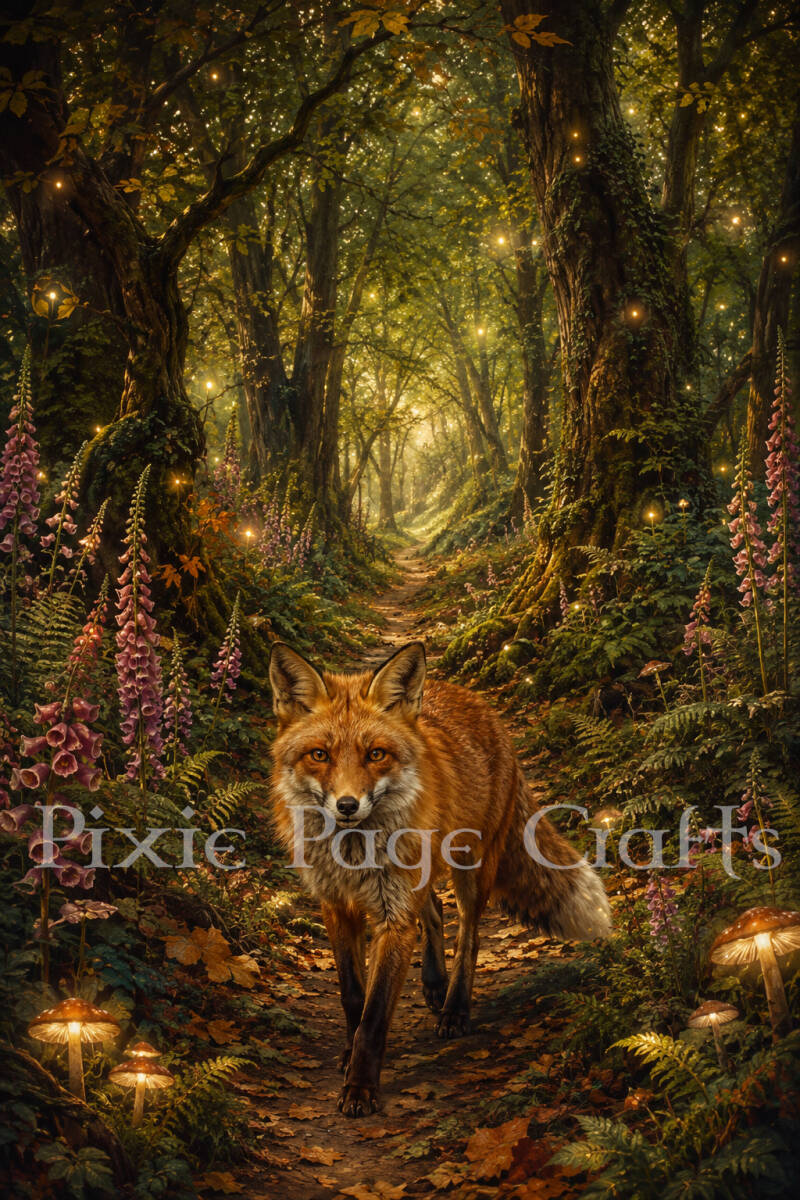
A particular hill might have a story attached to it. A spring might possess healing properties. An ancient mound might be associated with supernatural inhabitants. A certain animal appearing at an unusual moment might be interpreted as significant.
This closeness between the ordinary and extraordinary is one of the most compelling aspects of Celtic folklore.
The Otherworld
One of the recurring concepts in Irish and Welsh mythology is an extraordinary realm commonly described today as the Otherworld.
It should not simply be understood as heaven, hell or the land of the dead.
Different stories describe supernatural realms in different ways. They may contain magnificent halls, endless feasts, beautiful landscapes, supernatural beings and very different experiences of time.
Sometimes the Otherworld appears to be somewhere distant. At other times it seems remarkably close. A person might reach it by crossing water, entering a mound or encountering a mysterious stranger. That creates one of the great themes of Celtic storytelling:
The boundary between worlds can sometimes be crossed. And those boundaries often occur in unusual places.
Sacred Landscapes and Liminal Places
Certain places naturally feel like boundaries. The seashore is neither completely land nor sea. A river separates one bank from another.
A cave takes you from daylight underground. A doorway separates outside from inside. Twilight is neither day nor night.
These are known as liminal spaces — places or moments existing between states.
Folklore repeatedly gives significance to such boundaries. Wells, springs, rivers, caves, ancient trees, hills and burial mounds could all accumulate stories and customs over generations.
This is one reason Celtic-inspired art so often contains standing stones, forests, mountains and water. They create a visual language of ancient landscapes and mysterious boundaries.
But there is an important distinction: not every standing stone was necessarily a Celtic religious monument. Many famous stone circles and megaliths are considerably older than the cultures conventionally described as Celtic.
Later generations could nevertheless create entirely new folklore around ancient monuments whose original purpose had long been forgotten.
Sacred Water
Water has an especially powerful place in Celtic traditions.
Archaeology provides evidence that people deposited valuable objects in rivers, lakes, bogs and springs during prehistoric and Iron Age periods.
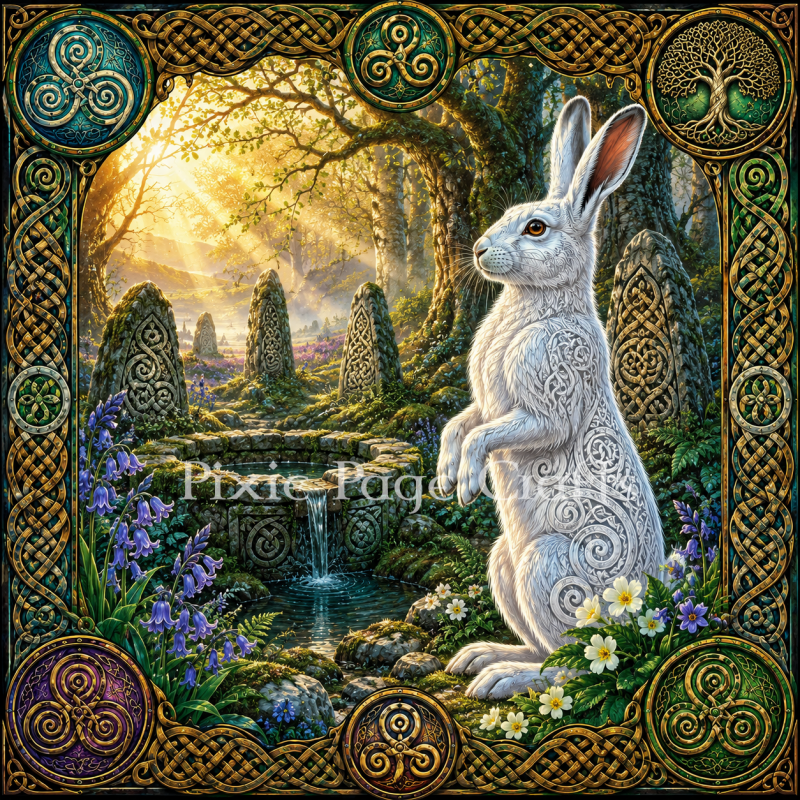
Some deposits are interpreted as ritual offerings, although we cannot know the motivation behind every individual object.
Later folklore also gives wells and springs tremendous importance. Some became associated with healing. Others developed customs involving offerings, prayers or particular days of visitation.
After Christianisation, older traditions and Christian practices could become intertwined, with sacred wells associated with saints.
Water therefore represents something fascinating about folklore itself. Beliefs rarely disappear overnight.
They change.
A sacred place can acquire new stories while retaining something of its older significance.
Trees, Groves and the Living Landscape
Trees occupy an equally powerful position in folklore.
A huge ancient tree naturally commands attention. It can outlive generations of people and become a landmark around which stories accumulate.
Certain trees became particularly prominent in Irish and British traditions.
Hawthorn, for example, developed strong associations with fairies in Irish folklore. Lone hawthorns could consequently acquire reputations that made people reluctant to damage them.
Trees also possess an obvious symbolic power. Every year they appear to die and return. Leaves emerge, flourish, fall and disappear.
Then spring comes again.
For modern Pagan traditions especially, this makes trees natural representations of life, death, renewal and interconnectedness.
The familiar modern Celtic Tree of Life artwork draws upon these broader ideas, although modern designs should not automatically be treated as exact reproductions of a single ancient Celtic religious symbol.
Animals and the Supernatural
Animals are everywhere in Celtic mythology.
Boars, horses, ravens, hounds, salmon, deer and other creatures appear in stories in ways that range from ordinary animals to extraordinary supernatural beings.
Animals could represent qualities humans admired or feared.
The stag possesses magnificent antlers and disappears into forests.
The raven consumes carrion and appears around battlefields.
The salmon travels through mysterious waters.
The horse combines enormous strength with speed.
The owl moves through darkness.
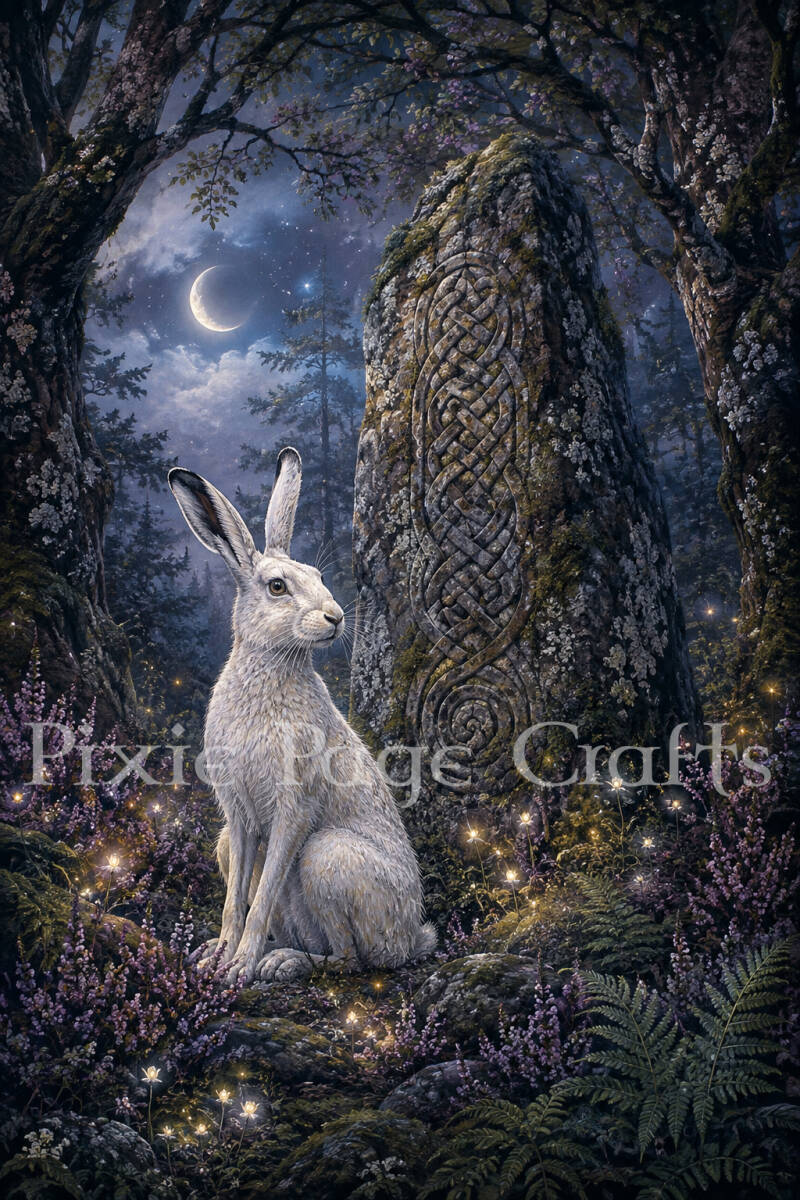
The hare can suddenly appear and disappear across open countryside.
It isn't difficult to see how these characteristics could become incorporated into storytelling.
But modern claims such as “the Celts believed the wolf always represented loyalty” should be approached cautiously.
Ancient symbolism was rarely that tidy.
One animal could play completely different roles in different stories.
That actually makes the mythology more interesting.